
Kidney stone: how Ayurvedic treatment works, and how long it takes
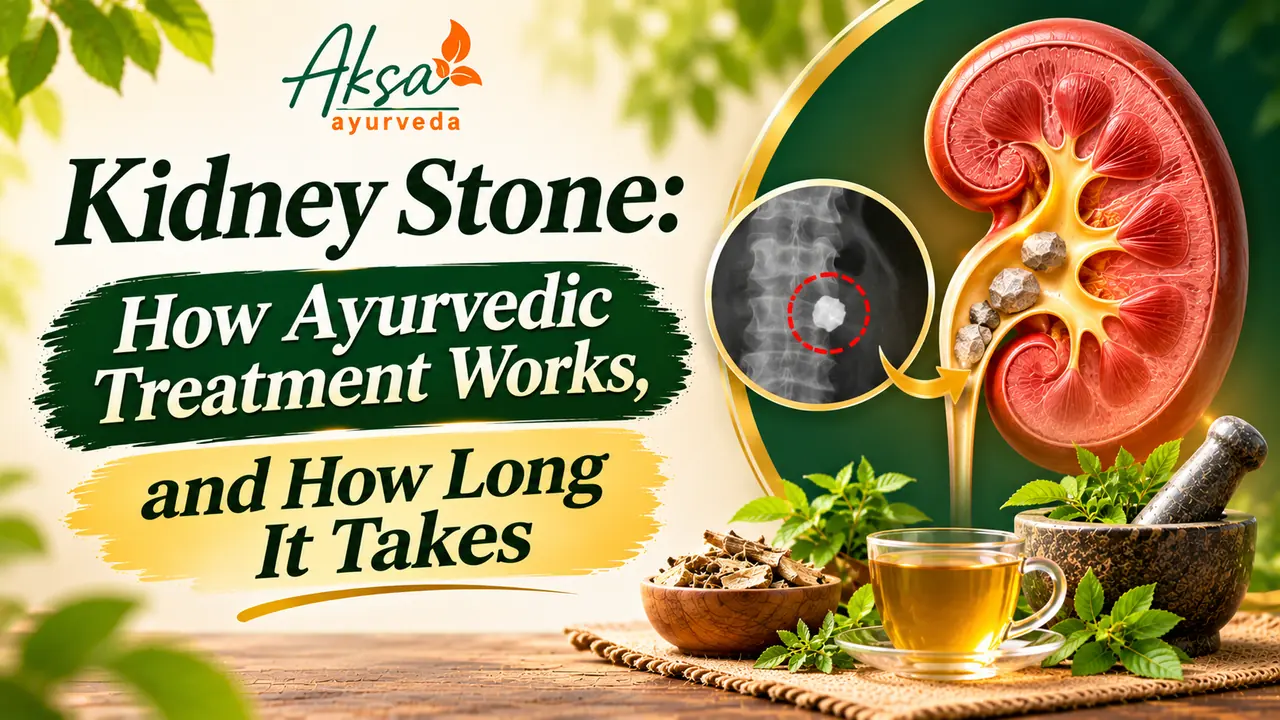
What decides whether a stone passes at home is its size and where it is sitting — not the bottle you buy or the days you are willing to wait. Here is the honest timeline, and the part ayurvedic care actually plays in it.
One thing first: you will see advertisements with round numbers of thousands cured in a fixed number of days. We will not repeat a figure we cannot show you, because a stone either moves, dissolves, or needs to be removed — and which of those it is can be seen on an X-ray or a CT within a day.
What is really happening
A stone forms in the kidney and only becomes famous when it drops into the ureter, the thin tube to the bladder. The colic — severe, one-sided, coming in waves, with vomiting and restlessness — is that tube trying to push against a blockage. Between attacks, the question is not how to kill the pain but whether urine is still getting past the stone, whether there is infection behind it, and whether the kidney is being damaged while nobody looks.
The size rules, which matter more than any herb
- Under about 5 mm: most pass on their own, typically within one to three weeks, sometimes sooner. Hydration, ordinary pain control and time do the work.
- 5 to 10 mm: roughly half pass without intervention, and the decision to wait is made with an ultrasound, a pain plan and a urologist in the loop — not with a calendar at home.
- Above 10 mm, or a stone sitting in the kidney rather than the tube: it will not pass. It needs a procedure, and the honest options are discussed by a urologist.
- A stone in the kidney that causes no symptoms and is small is often simply watched with scans. Not every stone needs treating, and anyone promising to melt a calcium oxalate stone with a syrup is describing something that does not happen.
Only one family of stones can genuinely be dissolved: uric acid stones, with urine alkalinisation supervised with blood and urine tests. That is why the analysed composition of a stone changes the plan for the next ten years.
What the first weeks look like at home
- Fluid enough to pass two to two and a half litres of urine a day, which means drinking through the day and a glass after the night sweat and before bed — urine concentrates overnight, which is when stones grow.
- Strain every urine through a cloth or a sieve. A caught stone gets analysed; a lost one teaches nobody anything.
- Move. Walking does not push a stone out, but bed rest helps nothing else either.
- Heat on the flank for the colic waves, and pain relief taken as prescribed rather than rationed out of fear of tablets.
- The routine painkiller habit stopped, and any unlabeled supplement stopped too — a kidney with a blockage does not need extra toxic load.
- Salt below roughly a teaspoon a day, and normal dietary calcium with meals rather than cutting it out; low calcium in the diet increases oxalate absorption and produces more stones.
- A review scan and blood test on a booked date, not when you feel like it. Silent obstruction is the way kidneys are lost.
Where ayurvedic treatment fits
It fits in three places, and none of them is in front of a blocked, infected kidney. First, the prevention half: the fluid and salt discipline, the diet built around your stone's composition, and the follow-up interval — the part that stops the next one forming, which is where most of the real value lies, since recurrence is common. Second, the passage phase: measured herbal support for the urinary tract and the inflammation around the tube, alongside a proper pain plan and medical expulsive therapy when a urologist prescribes it, with a scan watching the kidney. Third, the between-episode phase: the recurrent-infection and burning-urine complaints that bring people to us long after the stone has gone.
What we do not do is promise dissolution. Classical kidney herbs — punarnava, gokshura, palash and the rest — are named in texts for this very complaint, and their doses are not on this page or anywhere else on it, because a name without the plant part, form, dose and your reports in front of it is not information.
Same-day, not next-week
- Fever and chills with flank pain: an obstructed infected kidney is an emergency measured in hours, and no oral remedy belongs in the way.
- Pain that tablets do not control, or vomiting that stops you drinking.
- Passing little or no urine, or pain in a single known kidney, or after a transplant.
- Rising creatinine on two reports weeks apart, or swelling of the feet and breathlessness.
- Stone disease with pregnancy, with a bleeding disorder, or on blood thinners.
- Colic lasting more than a day with no relief, or a second attack in the same week.
How an Aksa consultation handles a stone case
Numbers and pictures first: serum creatinine, urea and electrolytes, a urine routine and culture, an X-ray or ultrasound for size and position, and a CT when the decision hinges on it. Then the case is sorted into one of three questions — is this passing, is this blocked, is this recurring — because each has a different answer and a different clock. Where a procedure is needed, the referral is made in the same sitting and we continue alongside the urologist rather than competing with them. Aksa physicians have been consulting on stone and urinary cases since 1992. A video consultation is free and needs no travel; where imaging or examination is needed we see people at our two clinics in Delhi, Model Town and Burari. Bring the reports, and if you have caught a stone, bring the stone.
None of this is a prescription. Dose and safety change with kidney function, potassium, pregnancy and every other medicine you take, so confirm anything you intend to take daily with a qualified doctor.
So the honest answer to how long it takes: a small stone, one to three weeks of fluids and time; a larger one, a decision made with scans rather than hope; and prevention, which is the part that lasts a lifetime and is the part worth coming to a physician for.
Related reading
Kidney stone passed with Ayurvedic treatment — how it happens
Read
Kidney stone without surgery: what Ayurveda recommends
Read
Protein powder और gym — Kidney तथा Liver पर पड़ने वाला असर
ReadKidney stones: causes and care as per Ayurveda
ReadKidney stones: how Ayurvedic treatment clears them
Read
Herbs that support your kidneys, and how we use them
ReadTake the next step on your own case
Aksa physicians have been consulting on Ayurvedic care since 1992. Book a free video consultation and get a routine built around your digestion, sleep and history.