
Gallbladder stones: what Ayurveda can do before surgery is considered
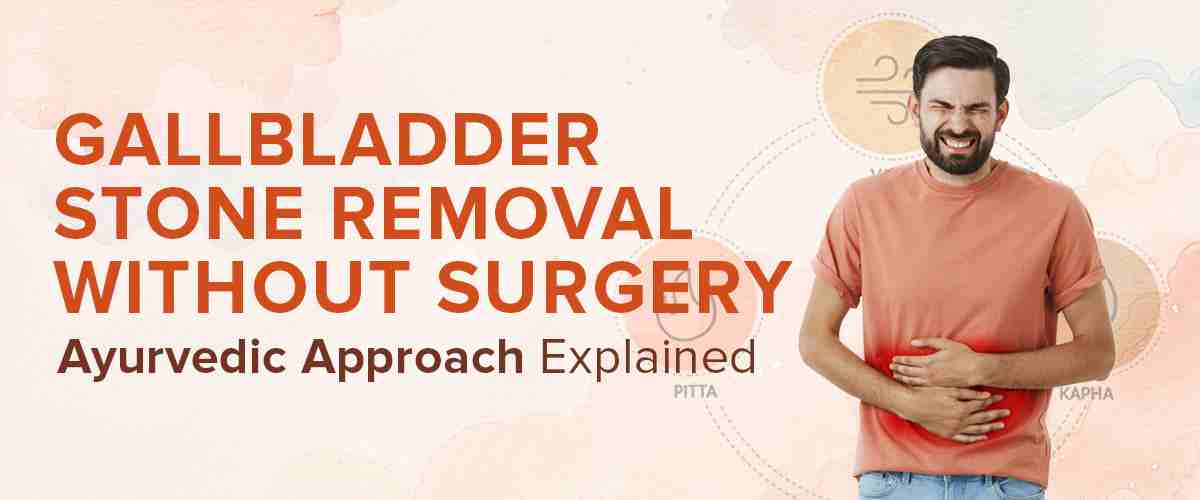
Gallbladder stones cannot be dissolved reliably by medicine or diet; what Ayurveda can do before surgery is support digestion and reduce attacks in selected mild cases.
The phrase stone removal without surgery sells a promise that the evidence does not keep, and we will not make it. A gallbladder stone is a solid concretion of cholesterol or pigment sitting in a small organ whose job is to store and squeeze bile. Once formed, most stones stay formed. The honest question is not how to melt them but whether they are causing trouble, and what can be done about the trouble while the decision about surgery is made properly. This piece draws that line clearly.
What a gallbladder stone is, and why it hurts
Bile is made in the liver, stored in the gallbladder, and squeezed into the intestine after a fatty meal to digest fat. When bile becomes supersaturated, cholesterol crystallises and stones form. A stone that sits quietly causes nothing; a stone that moves into the neck of the gallbladder or the duct blocks the squeeze, and the organ contracts against a closed door - that is the biliary colic, the severe right-upper pain after a fatty meal that can last hours.
- Silent stones: found on an ultrasound done for something else. Many never cause symptoms.
- Symptomatic stones: repeated colic, or complications like inflammation, infection, jaundice or pancreatitis.
The management differs completely between those two groups, which is why the ultrasound report alone is not the decision.
What Ayurveda can honestly do before surgery
In selected people - silent or mildly symptomatic stones, no complications, and a surgeon who agrees to watch - the work is on digestion and on the frequency of attacks, not on the stone itself.
- Meal pattern: regular, modest, lower-fat meals keep the gallbladder's squeeze gentle and predictable. Long fasting followed by a heavy fatty meal is the classic trigger for colic.
- Digestive support: classical bitter and hepatic herbs - kutki, bhumi amla, turmeric, triphala-type formulas - are used to support bile flow and digestion. They may ease the heavy, bloated, fatty-food intolerance between attacks; they do not dissolve the stone.
- Weight and metabolic care: gradual weight loss, waist and sugar control reduce the cholesterol saturation of bile. Rapid crash weight loss does the opposite and can form new stones.
- Symptom diary: what was eaten, when the pain came, how long it lasted. This is what tells the surgeon whether watching is still safe.
None of this is a removal programme. It is a way of living well with a stone while the decision is made on evidence, not on hope.
When surgery is the right answer, without delay
Once stones cause repeated colic or any complication, removing the gallbladder (cholecystectomy) is the standard and effective treatment, and delaying it with remedies carries real risk.
- Repeated biliary colic: each attack is a chance for a stone to lodge somewhere worse.
- Acute cholecystitis: fever with persistent right-upper pain and tenderness - needs urgent medical care, not diet.
- Jaundice, dark urine with pale stools, or a stone in the common duct: urgent review.
- Gallstone pancreatitis: severe upper abdominal pain radiating to the back with vomiting - emergency.
- A porcelain gallbladder, very large stones, or a polyp alongside: surgical opinion regardless of symptoms.
Saying this plainly is part of the treatment. A patient who is told the truth early makes a better decision than one who is sold a dissolve programme for six months.
The diet that reduces attacks while you decide
- Modest fat at each meal, spread through the day; avoid the single heavy fried feast that triggers colic.
- Regular meals, no long fasts. Skipping meals lets bile sit concentrated; the crash diet is a stone-forming pattern.
- Fibre and gradual weight loss if weight is high; refined sugar and refined flour reduced.
- Identify and avoid your own trigger foods - for many it is fried food, cream, or a heavy restaurant meal.
- Hydration through the day; alcohol limited, since it adds to the liver and pancreas load.
What we will not promise
- No herb, oil, flush or cleanse dissolves a formed gallbladder stone reliably. The olive-oil and lemon flushes produce soap lumps in the stool, not stones - a chemistry trick, not a treatment.
- No diet removes a stone that is already blocking a duct. That is an emergency, not a kitchen question.
- We do not advise stopping or postponing a recommended surgery in favour of a remedy, and we do not offer any detox or cleansing programme as a stone treatment.
Living with a silent stone: the review schedule
A stone found incidentally, with no symptoms, often needs no treatment at all - only a plan for knowing if that changes.
- Agree the review interval with the surgeon or physician; many silent stones are simply watched.
- Keep the symptom diary: any right-upper pain after a fatty meal, its duration, and any fever, jaundice or vomiting.
- Return promptly if colic appears, because the first attack changes the category from silent to symptomatic.
- Do not repeat ultrasound every few months on your own; the interval is a clinical decision, not a anxiety ritual.
After gallbladder removal: eating again
Most people digest normally without a gallbladder, because the liver still makes bile; it simply drips continuously instead of being stored and squeezed.
- Reintroduce fat gradually over the first weeks; a heavy fried meal too soon is the common cause of early loose stools.
- Loose stools in the first weeks usually settle as the gut adapts; persistent diarrhoea deserves a review, not silence.
- Keep fibre and regular meals; the same metabolic care that prevented stones still matters for the liver and the waist.
- The diet after surgery is a transition, not a lifelong sentence of boiled food.
Questions to ask the surgeon before deciding
- Is my stone silent or symptomatic, and what specifically changes the recommendation?
- What is the risk of waiting six months versus operating now?
- Laparoscopic or open, and what is the expected recovery and time off work?
- What happens if a stone moves into the duct - and what symptoms should send me straight to emergency care?
Asking these turns the decision from a fear into a plan, which is exactly what the honest version of this topic is for.
Where we fit in
At our two centres in Delhi, Model Town and Burari, the gallbladder sitting starts with the ultrasound and the symptom diary: silent or symptomatic, any complication, what the surgeon has said. Where watching is appropriate we write the meal pattern and the digestive support with a review date; where surgery is indicated we say so in the same sitting and help the person prepare for it rather than delay it.
Aksa physicians have been consulting on this since 1992, and a video consultation is free and needs no travel. What we add is digestion, diet and honest triage; what we never add is a promise of removal without surgery.
Every individual is different. Before changing any medicine, dose or routine, please consult a qualified doctor, and treat severe persistent pain, fever with pain, or jaundice as urgent medical problems rather than diet problems.
Related reading
Kidney stone without surgery: what Ayurveda recommends
Read
Planning knee replacement surgery? Read this first
ReadKidney stones: causes and care as per Ayurveda
ReadKidney stones: how Ayurvedic treatment clears them
ReadLiver and gallbladder conditions we treat
ReadLiver and gallbladder diseases: the Ayurvedic treatment plan
ReadTake the next step on your own case
Aksa physicians have been consulting on Ayurvedic care since 1992. Book a free video consultation and get a routine built around your digestion, sleep and history.