
Herbs for joint pain do work — a little, slowly, and for the right kind of joint. The honest version of that sentence is what this post is about.
Almost every person with a sore knee has been told to take something herbal. Some of those things have real trials behind them, some have only tradition, and a few have produced liver injury in otherwise healthy people. The difference between them is worth knowing before a bottle is bought, because joint pain is exactly the complaint where people self-dose for months.
The five herbs people actually ask for
- Turmeric and curcumin. The best-supported of the lot for osteoarthritis pain, with trials showing modest relief — roughly comparable to an ordinary anti-inflammatory tablet in some knee studies, and clearly less than an injection or a replacement. Curcumin is poorly absorbed, which is why extracts with piperine or lipidal forms do what a spoon of kitchen haldi cannot. Cautions: gallbladder problems, blood thinners, iron absorption, and stomach upset at high doses.
- Shallaki, or Boswellia serrata. Frankincense resin with a genuine anti-inflammatory profile and a handful of decent trials in knee osteoarthritis. Effect appears after six to eight weeks, not three days. Quality varies enormously between products, which is why one brand seems to work and another does nothing.
- Guggulu, Commiphora wightii. The resin in most classical joint formulations. It lowers cholesterol in trials and helps some people with stiffness. Real cautions: it is not for anyone in pregnancy, it can interact with thyroid tablets and blood thinners, and it sits in formulations that sometimes contain metals.
- Ashwagandha. Useful for the sleep, fatigue and 'everything hurts' layer that comes with chronic pain, rather than for the joint itself. It can shift thyroid hormone levels, which matters both for the reading of a blood test and for anyone on thyroid tablets; it also upsets some stomachs and is sedating with other medicines.
- Guduchi, Tinospora cordifolia. Prescribed traditionally for inflammation and skin. It also has a documented link to liver injury in a small number of people, sometimes after weeks of use, and it can lower sugar readings in people on diabetes tablets. This is the herb to be most careful about, not the most famous one.
What the label does not guarantee
- Standardisation. 'Ayurvedic' says nothing about how much active compound is in the capsule. Two bottles of the same herb can be several-fold different.
- Adulteration. Unregistered joint and back products have been found to contain corticosteroids and painkillers. The relief is real and so is the damage: sugar, blood pressure, bone thinning, adrenal suppression, and a joint that gets quietly worse while it feels fine.
- Metals and minerals. Some classical formulations deliberately contain processed bhasmas. In the hands of a physician who knows the source, that is a considered decision; bought from a stranger at a bus stand, it is a lead and mercury risk.
- The combination packet. Six powders, no doses, no expiry, no batch. Nobody can tell you what you took or what it will do with your other tablets.
How to run a fair eight weeks
- One product, one complaint. Not four powders started together, because then nothing can be attributed to anything.
- A labelled, dated, single-manufacturer product with a stated extract, taken at the dose on that label and not doubled when it seems slow.
- A written baseline: how far you walk, how many stairs, how you sleep, what you take for pain. Read it again at six and eight weeks.
- Pain tablets kept as they were, so the change in them is visible. If the need for them falls, the trial is doing something.
- A stop rule. No clear change by eight to ten weeks means it stops. Herbs are not a habit; they are a trial with an end.
- Bloods where they are warranted: liver and kidney tests for anyone on regular herbal doses, sugar and pressure readings where those matter, and a call if the eyes or skin go yellow, the urine darkens, or itching arrives without a rash.
What these herbs never do
- Regrow cartilage. A worn knee stays worn; a collapsed hip in avascular necrosis stays collapsed.
- Replace surgery when the joint has reached that point, or delay a decision that was already due.
- Settle a septic, gouty or rheumatoid joint. Those need their own treatment and delay costs damage.
- Fix the mechanics. Weight, footwear, stair habit, thigh strength and how you lift do more for a knee than any capsule.
Interactions worth naming to your doctor
- Blood thinners and antiplatelet tablets, because turmeric, guggulu and boswellia all add to the bleeding side.
- Diabetes tablets, because guduchi, guggulu and ashwagandha can all pull sugar readings down.
- Thyroid tablets, because guggulu and ashwagandha change the numbers and the dose.
- Immunosuppressive treatment after transplant or in autoimmune disease, where herbal stimulation is precisely the wrong direction.
- Steroid tablets and painkillers already taken daily, where a 'natural' add-on hides a rising total load.
- Any planned surgery, where herbal blood-thinning matters in the anaesthetist's list.
At our two centres
- Model Town and Burari, first consultation free. We do prescribe herbal medicines where they belong — along with the diagnosis, the dose, the stop date and the blood tests. What we will not do is hand you six powders for a knee that needs weight, physiotherapy and an opinion from an orthopaedic surgeon.
- Bring every packet you are already taking, including the one a relative sent from another city. The most useful thing in the room is usually the label.
The pain that is not an herbal case
- One hot, red, swollen joint with fever is an infection until proven otherwise, and a day of delay is a destroyed joint. No powder, no oil, no trial.
- A sudden, savage, overnight attack of the big toe is gout and needs its own treatment; herbs for osteoarthritis do nothing for a crystal.
- Morning stiffness of both hands for more than half an hour, small joints swelling symmetrically, is rheumatoid arthritis and is a disease of the immune system, where 'stimulating' herbal add-ons are exactly the wrong direction and where delay causes permanent deformity.
- A knee that locks, gives way or swells after a twist is a mechanical problem: a meniscus or a ligament. Capsules do not fix a flap of cartilage.
- Calf swelling with pain on one side, or a swollen painful joint in someone on bed rest or after surgery, is a clot until someone says otherwise.
- Pain in the hip with shortening of the leg after a fall in an older person, night pain that wakes you with weight loss, or pain that has been treated for three months without ever being examined: all three need imaging, not a stronger dose.
What works alongside the herbs
- Weight. For a knee, every kilo lost takes several kilos of load off it with each step. This is the largest single effect available and it is not herbal.
- Thigh strength. Straight-leg raises, a chair stand done ten times twice a day, and a stationary cycle at low resistance reduce knee pain in trials more reliably than any supplement.
- Heel-cord and hip flexibility, which changes how the joint is loaded when you climb and descend.
- Footwear and surfaces: a cushioned shoe, no flat rubber chappals for long walking, no bare floors in winter, and stairs reduced rather than 'pushed through'.
- Heat for the stiff joint, cold for the swollen one, and a topical anti-inflammatory gel preferred over oral tablets when the stomach or kidney is a worry.
- Sleep and mood, which set the volume of pain. A person sleeping five hours reports more pain from the same knee than one sleeping seven.
- Expectation: with the right herb at the right dose and the work above, a reasonable result is thirty to forty percent less pain over two to three months, not zero. Anyone promising zero is selling something.
Every individual is different. Before starting any new remedy or routine, please consult a qualified doctor, especially if you are pregnant, on regular medication for BP, sugar or thyroid, take blood thinners, or have liver or kidney problems.
Related reading
3 simple home remedies for joint pain
Read
5 easy Ayurvedic tips to keep joint pain down
Read
5 mistakes that are making your joint pain worse
Read
Ayurvedic oils for joint pain, and how to use them daily
Read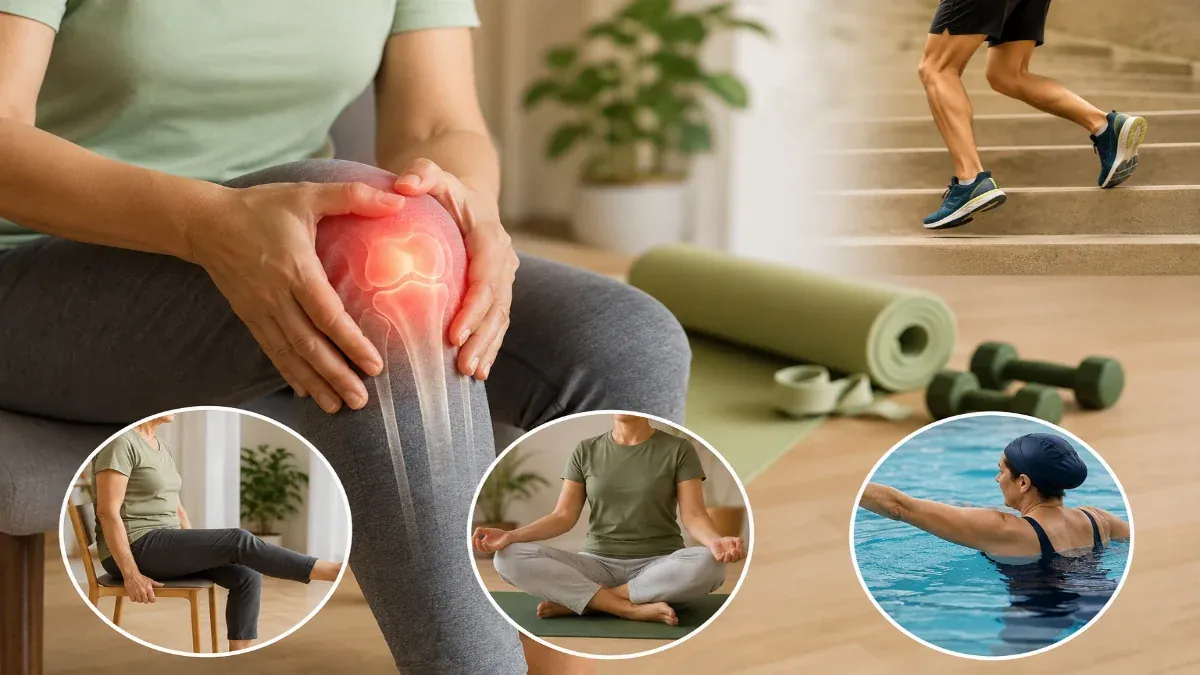
Joint pain में कौन सा movement सही है और कौन सा नहीं
Read
Joint pain: home remedies worth trying first
ReadTake the next step on your own case
Aksa physicians have been consulting on Ayurvedic care since 1992. Book a free video consultation and get a routine built around your digestion, sleep and history.