
Dust allergy: why it triggers sneezing attacks
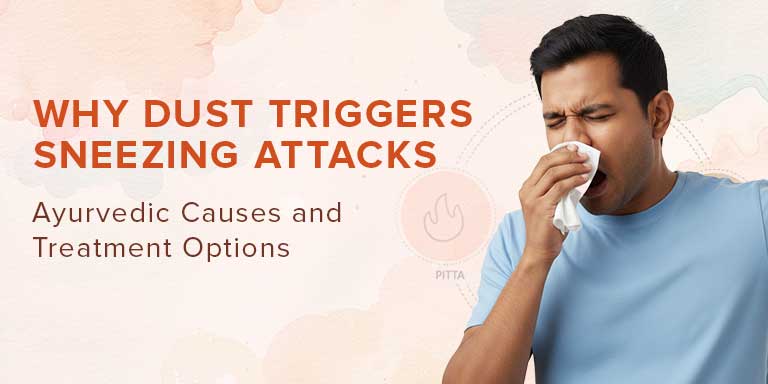
Ten sneezes in a row on a Sunday morning, eyes watering, nose running, throat itching - and by afternoon you feel normal again. That pattern has a specific address.
Why the attack comes in a burst
House dust is not one thing. It is a mixture - dust mites and their waste, cockroach particles, skin flakes from people and pets, mould spores from damp corners, fabric fibres, and the ordinary particulate that comes in from the road. In a sensitised person, the immune system has decided that one of these is a threat. The next time it is inhaled, cells in the nose lining release histamine and related chemicals within minutes, and the response is designed to eject the intruder: sneezing, watery secretion, swelling of the nasal lining and itch.
Because the reaction is fast, it clusters. One disturbance - opening a cupboard, shaking a bedsheet, sweeping, sitting on an old cushion - lifts a cloud of particles, and the nose answers it in a run of sneezes rather than a single one. Morning attacks are the classic version, because you have spent eight hours breathing directly into the pillow, where mites live best, and because the nasal lining swells when lying flat.
A useful detail: the sneeze burst is not an infection and not a cold. There is no fever, no body ache, no green discharge, and it settles in an hour or two instead of a week. That distinction changes what treatment should look like.
Find the source before changing the medicine
- Bedroom first. Mattress, pillow, quilt, curtain and carpet hold most of the load, and they are also where you spend the longest continuous stretch of breathing.
- Soft toys, old cushions, stored clothes and cardboard boxes - the things that sit in a corner collecting and then get shaken out.
- Damp walls, a leaking bathroom ceiling, a kitchen sink unit that smells musty: mould is a different trigger and it responds to fixing the damp, not to washing.
- Cockroach signs in the kitchen and the pantry, especially in shared buildings. This is an under-recognised cause of year-round sneezing in cities.
- Pets, even a pet that lives in another room - the particles travel on clothing.
- Dry sweeping and ceiling fans, which do the opposite of cleaning by keeping the fine fraction airborne for an hour afterwards.
If symptoms are clearly worst in one room, at one time of day, or after one specific chore, you already know more than a test would tell you. Formal testing - skin prick or a blood specific-IgG test - is worth doing when the picture is year-round and severe, when you want to know whether immunotherapy is an option, or when the diagnosis is genuinely unclear.
What actually reduces the load
- Wash bedding hot - the hottest the fabric allows - once a week, and dry it in sunlight. Cold rinsing does not kill mites.
Getting through an attack that has already started
Once the burst begins, the nose is already primed, and the aim is to stop the second wave rather than argue with the first.
- Leave the room that triggered it. The cloud you disturbed stays airborne for a while, and staying to finish the job doubles the dose.
- Rinse with saline as soon as you can. This is the fastest way to physically get the particles off the lining.
- Blow gently, one nostril at a time. Forcing both together pushes secretions toward the sinuses and the ear.
- Warm shower or steam for a few minutes if the nose is blocked, then the saline rinse afterwards. Steam soothes; it does not clean on its own.
- Wash the face and hands, and change the shirt you were wearing while dusting - the particles ride on fabric into the bedroom.
- If an antihistamine was prescribed for exactly these episodes, take it as directed rather than waiting for the third attack of the week. If none was ever prescribed, that is the conversation to have, not the reason to buy whatever the counter suggests.
- Zip the mattress and pillows into dust-mite-proof encasings. This is the single change most likely to help a morning-attack pattern.
- Remove what you can from the bedroom: extra cushions, rugs, soft toys, open shelves of books and stored cardboard. What cannot go should be washed or wiped, not dusted with a dry cloth.
- Clean with a damp cloth, and let the person with the allergy out of the room while sweeping, dusting or shaking quilts. Wearing a proper mask helps; a handkerchief does not.
- Keep indoor humidity down, fix damp, and run the bathroom extractor or a window after bathing.
- In pollution-heavy seasons, keep the window on the road side shut at peak traffic and ventilate at the quieter hours; an air purifier with a true HEPA filter helps some households, particularly for the particulate part of the problem.
- Wash the nose with saline. A squeeze bottle or a neti-style rinse with boiled and cooled water, made correctly, physically removes the particles and the mediators from the lining. It is unglamorous and it works, and it is the one measure that costs nothing and can be done daily.
Where the kapha label fits
Ayurveda describes this constitution as kapha-pradhana with a weak dhatu-agni - a body that accumulates, holds moisture, and reacts heavily to cold, damp, heavy and sweet things. As a description it is genuinely accurate: the pattern of morning congestion, thick clear discharge, worse in winter and damp weather, better with warmth, dryness and light food, is exactly what we see in clinic. As an explanation it stops short: it does not name the mite, and it does not change the fact that the pillow is where the dose is.
What we do with that framework is practical rather than mystical. Warm, dry, lightly spiced food on bad days; avoiding cold drinks, heavy night meals and curd at bedtime for the people who notice they worsen the morning; steam and saline; regular activity that opens the nose on its own; and treating the bedroom as the first line of treatment, not an afterthought. What we do not do is promise a permanent cure, or ask anyone to stop a nasal steroid or an antihistamine that a doctor has prescribed - step-down is a discussion with that doctor, and the antihistamine article on this site covers the long-term question honestly.
When to get properly assessed
- Symptoms most days for weeks, or sleep disturbed by a blocked nose.
- Facial pain and pressure with fever, thick discharge on one side, or loss of smell - that is sinus infection territory and needs its own treatment.
- Wheeze, chest tightness or breathlessness with the sneezing. Allergic rhinitis and asthma travel together far more often than people expect, and the chest needs examining.
- Blood-stained discharge, one-sided blockage, or a foul smell - these are not allergy patterns.
- Snoring, mouth breathing or daytime drowsiness in a child, which points at adenoids and needs a different decision.
- Symptoms that keep returning despite the bedroom changes, where immunotherapy - the only treatment that changes the underlying sensitivity rather than the response - becomes worth discussing with an allergist.
At our two centres, a dust-allergy complaint starts with the room, not the prescription: what you sleep on, what is stored under the bed, where the damp is, and when the attacks actually happen. Fix that list and the medicine conversation becomes much shorter.
Every individual is different. Before starting any new remedy, drops or routine, please consult a qualified doctor, especially if you already take prescribed treatment for the nose or the chest.
Related reading

Asthma: triggers, symptoms and long-term control
Read
Seasonal allergy बार-बार क्यों लौटती है — immunity reset की ज़रूरत
Read
Sinusitis, headache or allergy: when nasal drops help
Read
Skin allergy: the Ayurvedic herbs we use
Read
गर्मी में बच्चे को Asthma trigger — pollen, dust और AC का असर
ReadGout: causes, attacks and home treatment
ReadTake the next step on your own case
Aksa physicians have been consulting on Ayurvedic care since 1992. Book a free video consultation and get a routine built around your digestion, sleep and history.