
Cervical spondylitis: Ayurvedic remedies for neck pain

Neck wear-and-tear after forty is close to inevitable; neck pain is not. What changes the course is the day, the shoulders, and knowing the cord's warning signs.
Cervical spondylitis is the radiologist's description of age change in the neck: discs losing height, the small joints at the back of the spine altering, sometimes a spur near a nerve. Nearly everyone's neck develops some of this, and plenty of people with a frightening report have no pain at all. That is the first thing to understand, because the fear of the word spondylitis produces more disability than the condition does.
Where the pain actually comes from
- Most neck pain is muscular and capsular: the trapezius and the muscles beside the spine, held half-contracted for hours at a screen, ache and then spasm and then ache more.
- The facet joints at the back of the spine refer a deep, local ache, often to the back of the head and the shoulder blade.
- A nerve root being irritated gives a very different pattern: pain travelling below the shoulder into the arm, with tingling in a specific line of fingers, and sometimes weakness. That is cervical radiculopathy, and it is managed differently.
- The spur itself is rarely the pain. It is the surrounding inflammation and the muscle guarding that hurt, which is why the bone on the X-ray and the symptom often disagree.
The day that builds a painful neck
- A phone held at the lap or chest, which flexes the neck for hours a day. Raising it to eye level is the cheapest treatment in this article.
- A monitor whose top line is below the eyes, a laptop used on the knees, and a chair with no support for the forearms.
- Forty-five minutes without standing. The neck is loaded most when it is still.
- Reading in bed with the head propped on two pillows, or lying on the stomach with a television above.
- A pillow too high or too flat. The neck should stay in line with the rest of the spine, not bent all night.
- Carrying a heavy bag on one shoulder, and long hours on a two-wheeler gripping with bent arms.
- Cold air-conditioning directly on the back of the neck, and a winter morning without warmth before movement.
- Clenching the jaw, which loads the neck from above and is frequently missed.
What helps, in the order we use it
- Keep moving. Bed rest and a soft collar for more than a few days make an ordinary neck worse; a collar is only for a specific decision made by a doctor.
- Isometrics first: palm against the forehead, the side of the head and the back, pushing gently for five seconds without any movement, twice a day. Then shoulder-blade squeezes and chest-opening stretches, because a neck usually hurts to compensate for a slumped upper back.
- Heat for ten to fifteen minutes before the exercises, and a warm shower before the day.
- The workstation changed properly, not symbolically: screen at eye height, chair that supports the lower back, forearms resting, phone lifted.
- Short courses of pain tablets or a topical gel for the worst days, chosen for the stomach and kidneys of the person, and not taken daily for months.
- Physiotherapy where the pattern needs hands and a plan, and where traction is done by a professional rather than from a YouTube video.
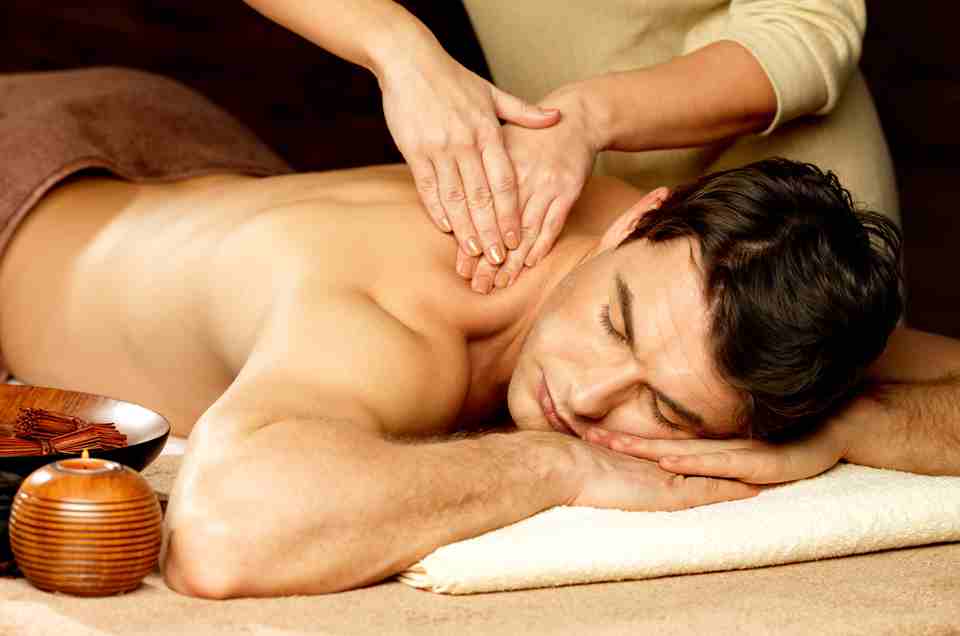
- Oil and gentle massage on the muscles around the shoulder and neck: real comfort, no effect on the disc. Nothing, herbal or surgical, regrows a disc or removes a spur without an operation.
- Sleep position and pillow height, which people are surprised to find is often the whole answer to morning pain.
- Stress and sleep, because the volume of neck pain tracks both more closely than it tracks the X-ray.
What we do not do with a neck
- We do not crack, twist or manipulate the cervical spine. High-velocity neck manipulation carries a real risk to the arteries of the neck and to an already irritated cord, and no amount of training makes it safe in someone with spondylitis.
- We do not hang anyone, pull the head, or perform any procedure whose aim is to 'put the disc back'. A bulge is not displaced bone.
- We do not promise that an oil, churn or capsule will change the picture on the X-ray. The aim is pain, function, sleep and the arm.
- If a nerve is getting weaker, or the cord is involved, we say so that day and the referral happens that week.
The symptoms that are not a joint problem
- Hands becoming clumsy: buttons, chopsticks, writing, dropping cups. That is the cord, not the muscle.
- A walking change — unsteady, stiff-legged, wide-based — or a band of tightness around the chest.
- New difficulty starting or holding urine, or numbness around the trunk, with neck symptoms.
- An electric shock down the spine on bending the neck forward.
- Pain with fever and stiffness, night pain that wakes you, weight loss, or pain after an accident: all need imaging and an opinion, not a routine.
- Progressive weakness in the arm, wasting of the shoulder muscles, or numbness that no longer comes and goes. These are surgical consultations, and delay costs function.
- Dizziness deserves care: the neck can contribute to it, but inner-ear, blood pressure, eye, sugar and neurological causes are commoner and must be excluded before anything is blamed on the spine.
At our two centres
- Model Town and Burari, first consultation free. We separate the ache from the nerve, look at the arm and the hand properly, decide whether the reports already in hand are enough, change the day — screen, pillow, phone, breaks, exercises — and add the medicine where it belongs. If the picture points at the cord, you will hear it from us on the first visit rather than the fourth.
The exercises, written out
- Chin tuck: sit tall, draw the chin straight back as if making a double chin, hold five seconds, ten times, three times a day. This is the one exercise that reverses the forward-head posture that causes most of the pain.
- Isometrics: palm against the forehead, push gently for five seconds without any movement; repeat at the back and each side. Five each, twice a day. Nothing moves, so nothing can be hurt.
- Shoulder-blade squeezes: pull the blades back and down as if holding a pencil between them, five seconds, fifteen reps. The neck is usually complaining on behalf of a slumped upper back.
- Doorway stretch: forearm on the frame, step through gently, twenty seconds each side, for the chest muscles that pull the shoulders forward.
- Upper-back extension over the back of a chair, ten slow extensions after a long sitting spell.
- Shrug and circle the shoulders, twenty times, every hour of screen work — the cheapest break available.
- Rule for all of them: discomfort is allowed, arm pain, tingling or dizziness is not. Stop those and tell whoever is supervising.
Pillow, phone and car, specifically
- One pillow, thick enough that the head stays level with the spine when lying on the side and lower when on the back. Two stacked pillows produce the morning neck that never settles.
- A memory-foam or contoured pillow is worth trying for four weeks before concluding that pillows do not matter.
- Phone at chest height or above, never at the lap for twenty minutes at a stretch; read in short bouts rather than one long session.
- Car headrest behind the head, not behind the neck; the seat pushed back so the arms rest on the wheel without reaching.
- Two-wheeler: elbows soft, mirrors set so the head turns rather than the neck craning, and a stop every thirty minutes on a long ride.
- Laptop on a table with an external keyboard, or on the lap only for ten minutes at a time.
- Bag on both shoulders or on wheels, and never the same shoulder for the same route every day.
Every individual is different. Before starting any new remedy or routine, please consult a qualified doctor, especially if you are pregnant, on regular medication for BP, sugar or thyroid, take blood thinners, or have liver or kidney problems.
Related reading





Take the next step on your own case
Aksa physicians have been consulting on Ayurvedic care since 1992. Book a free video consultation and get a routine built around your digestion, sleep and history.