
Piles symptoms are easy to describe and easy to misread. Bright red blood is rarely an emergency, and pain is the sign that most often points somewhere other than piles.
Here is what each pattern tends to mean, which symptoms belong to something else entirely, and when bleeding stops being a thing to watch at home.
What piles actually are
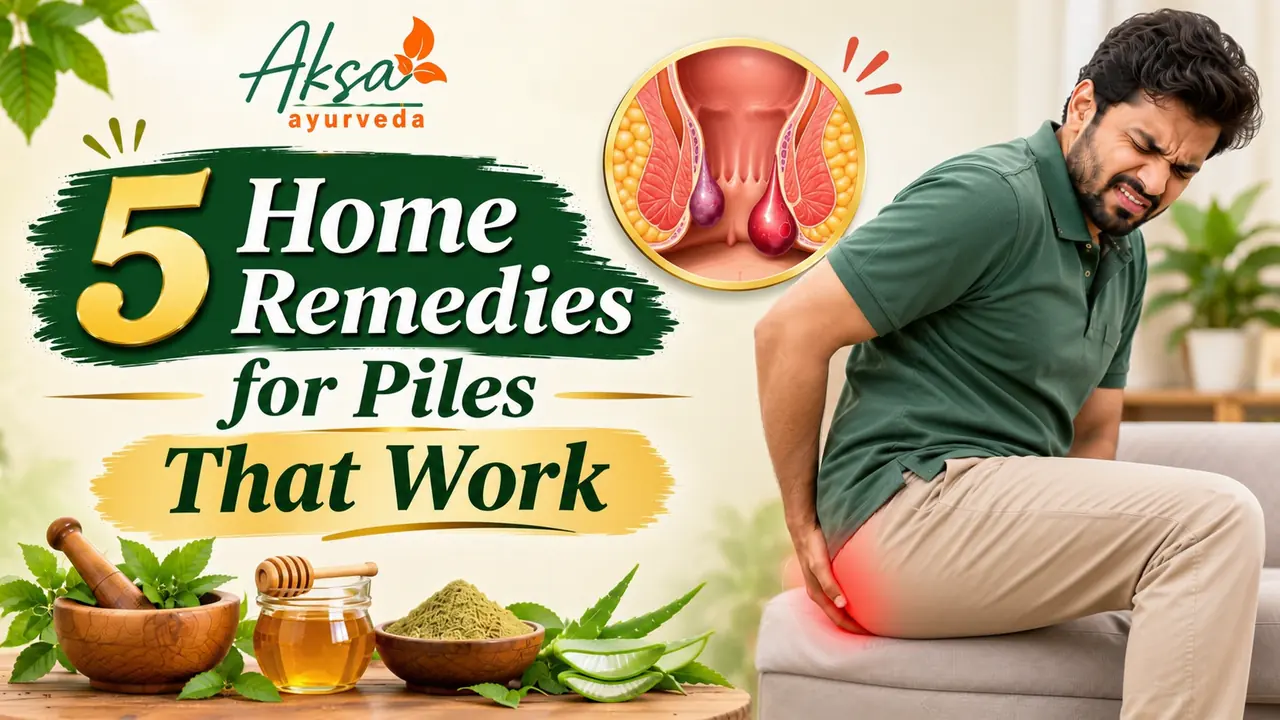
Haemorrhoids are not a growth that appears where there was nothing. Everyone has a cushion of blood vessels and supporting tissue in the lower rectum and around the anus; it seals the passage and protects it while you pass stool. Piles begin when that cushion swells, its supporting fibres loosen, and it starts to bulge, bleed or come down. That is why straining, chronic constipation, prolonged sitting on the toilet, repeated lifting, pregnancy and chronic loose motions are the usual backdrop - they all raise pressure on the same tissue.
Internal piles sit above the sensitive line and mostly bleed; external piles sit below it and mostly hurt, itch or leave a lump. Knowing which is causing your symptom explains why one person has blood without pain and another has pain without blood.
The five symptom patterns
- Painless bright red blood. On the paper, streaking the stool, dripping into the bowl, or in stronger cases squirting. The colour is fresh red and it usually appears at the end of passing stool. This is the classic internal pile sign, and it is also the sign that gets ignored the longest.
- A lump that comes out and goes back. Early on it appears only with straining and slides back on its own. Later it needs to be pushed back with a hand. In the most advanced stage it stays out and cannot be returned. That progression is the practical grading of internal piles, and it decides whether office procedures or surgery is the conversation.
- Itching, dampness and soiling around the anus. A pile that sits partly outside stops the area sealing properly, mucus leaks, skin gets irritated, and scratching makes it worse in a loop. People describe this as an allergy or a fungal problem far more often than it is either.
- A sudden hard, very tender blue lump at the anal edge. That is a clot inside an external pile - thrombosed piles. The pain is constant, sits at the anal opening, and peaks within the first day or two. It is frightening and miserable, and it usually settles over days to a couple of weeks; the small procedure that gives instant relief is only useful very early, which is why same-day assessment matters if the pain is severe.
- Fullness, discomfort and a sense of not finishing. Dull ache after long sitting, pressure at the anal opening, needing to strain again. This pattern overlaps with fissures, pelvic floor dysfunction and rectal prolapse, so it needs an examination rather than a guess.
Pain is the symptom that changes the answer
Plain internal piles do not usually hurt, because the tissue sits above the pain-sensitive line. When anal pain is the main complaint, the commonest causes are a fissure, a clot, an abscess or a fistula - and each is managed differently.
- Fissure: a tearing, cutting pain during passing stool, often described as passing glass, with a few drops of blood on the paper, and a burning ache that lingers for an hour or two afterwards. Usually follows a hard stool or a bout of loose motions.
- Abscess: constant throbbing pain and swelling at the anal edge, fever, and skin that is red and hot. This is not a piles problem and it is not a wait-and-watch one - it needs drainage, and delaying it lets the infection spread.
- Fistula: a small opening near the anus that keeps discharging pus or blood-stained fluid, sometimes healing and reopening. Often follows an abscess that was never fully treated.
The bleeding that is not piles
This is the part of the conversation nobody enjoys and everybody needs. Blood from the back passage has a long list of causes, and piles are simply the most common one, not a certificate.
- Blood that is dark, mixed through the stool, or passed with mucus, rather than sitting on the surface.
- A change in bowel habit that has lasted weeks - stool getting thinner, more frequent, more urgent, or constipation and loose motion alternating.
- Weight loss without trying, loss of appetite, unexplained tiredness, or a haemoglobin report that has quietly dropped.
- Iron-deficiency anaemia in a man or in a post-menopausal woman, which is treated as gut blood loss until proven otherwise.
- Any rectal bleeding after the age of about 45 to 50, or bleeding in someone with a close relative who has had bowel cancer or inflammatory bowel disease.
- Family history of polyps, previous bowel surgery, or long-standing unexplained abdominal pain.
A doctor sorts these with a simple set of steps: a finger examination, looking at the area with a proctoscope, blood tests for haemoglobin, and a colon examination when any of the features above are present or when the bleeding does not behave like piles. None of these are optional extras, and having piles does not rule out anything else - the two can live in the same person, which is exactly how a serious problem gets missed.
What to do while you arrange to be seen
The measures that reduce symptoms are not complicated, and they are the same ones that stop the tissue getting worse: enough water through the day, fibre added gradually rather than in one packet, stool passed as soon as the urge arrives, no straining and no phone on the toilet, loose motions treated early because they irritate the area as much as constipation does, warm water washing instead of hard wiping, and lifting done with the breath moving rather than held. Painful sitting spells should be shortened, not endured.
What to write down before you are examined
An examination takes two minutes and answers a lot, but the note you carry makes it useful.
- Where the blood sits: on the paper only, streaking the outside of the stool, dripping into the bowl, or mixed through it. Colour matters as much as amount.
- Whether a lump appears, whether it goes back on its own or has to be pushed, and whether it is out today.
- Whether there is pain, when it starts, how long it lasts after passing stool, and whether there is any swelling, discharge or fever.
- Bowel habit over the last month: how often, what shape, any thinning, any urgency, any night-time episodes - and any weight change you have not tried for.
- The full medicine list, including blood thinners, aspirin, iron and any ayurvedic or over-the-counter preparation already being taken for this.
- What has already been tried and for how long, because a cream used off and on for six months tells the doctor more than a clean description of the symptom.
What we do not recommend is starting a routine of self-prescribed antibiotic or steroid creams, or taking a bleeding episode as proof that everything is fine. If the bleeding is heavy, if you feel giddy, breathless or faint, if the stool is black and tarry, or if there is fever with a swelling at the anal opening, that is the same day, not the next week.
At our two centres, a piles complaint begins with the symptom pattern being sorted - bleed, lump, pain or discharge - and with the decision about whether this needs an examination and tests before any treatment is discussed. What we never do is hand out a remedy for bleeding that has not been explained.
Every individual is different. Before starting any new remedy, ointment or routine, please consult a qualified doctor, so the cause of the bleeding is established rather than assumed.
Related reading


Take the next step on your own case
Aksa physicians have been consulting on Ayurvedic care since 1992. Book a free video consultation and get a routine built around your digestion, sleep and history.