
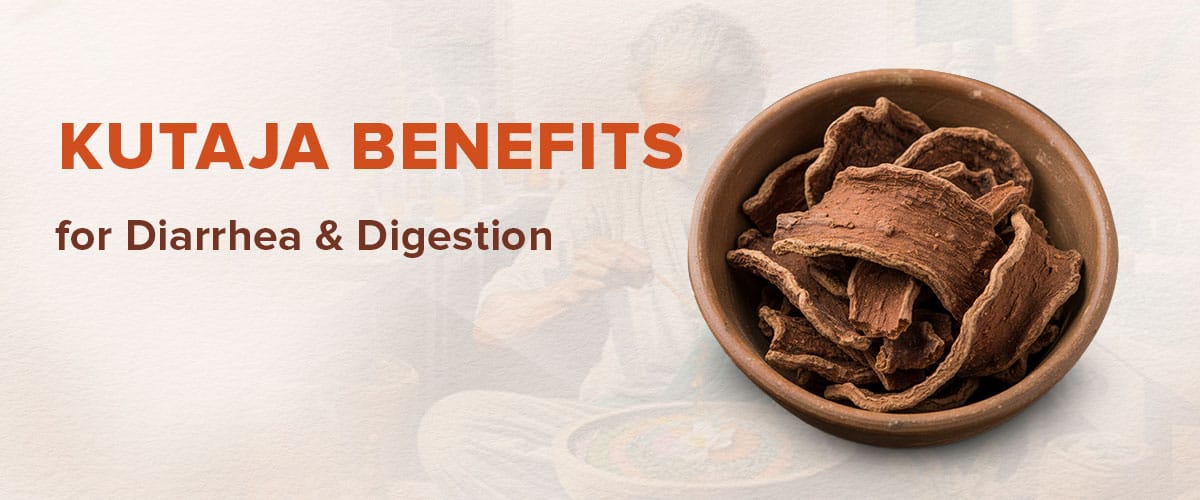
Kutaja is the herb the classical texts name for bloody diarrhea, and it is the clearest case on this page of a traditional answer that must never delay a modern one. The plant carries real alkaloids, and the diagnosis needs a stool test.
What it is
- Holarrhena antidysenterica, the conessine tree. The bark is the usual part, and the seed is stronger again.
- It carries steroidal alkaloids, conessine among them. This is not a mild fruit or a soothing leaf; it is pharmacologically active plant material.
- Conessine was isolated from this family and marketed in the last century as an actual anti-amoebic and anti-malarial drug. That history is where the traditional reputation came from.
- Forms: bark powder, kutaja ghrita, and the herb inside compound anti-diarrheal tablets.
What it is used for
- Persistent diarrhea, and the classical dysentery picture of frequent small stools with mucous, straining and cramping.
- Amoebic diarrhea in the traditional system, which is precisely the claim its name carries.
- Always as a short defined course with a stop date, with fluids continuing alongside it.
- In recovery, when the bowel has been loosened by an illness and a long course of something else.
What the first twenty-four hours actually need
- Oral rehydration solution made correctly or bought correctly, sipped continuously rather than gulped, and more of it than anyone thinks.
- Food continues. Bland, small and frequent, and the day of nothing but water is a mistake people make with genuine confidence.
- Note the stool count, the fluid going in, and how many hours since urine. That record is what a doctor needs on day three.
- A stool examination under a microscope, not a dipstick at a chemist, if there is blood or mucous or this has run past three days.
- Nothing anti-motility to simply stop the output in a bloody diarrhea. That is the one thing that turns a bad day into a dangerous one.
Where the honest limit sits
- Dysentery with blood, fever and severe cramping is a diagnosis, not a symptom. Amoebiasis and bacterial dysentery have treatments that act faster and can be tested for.
- Delay is the actual harm here: in a child with bloody stools, in an older person running several days of it, and in an amoebic liver abscess that presents as fever and right-sided discomfort.
- Kutaja does not rehydrate anybody. Oral rehydration solution does, and that comes first every time.
- If there is no clear improvement within two days, the herb has answered the question. The next step is a stool test and a doctor.
What goes wrong
- These alkaloids act on the heart and on the nervous system. When conessine was used as a drug it caused restlessness, confusion and rhythm problems in some patients.
- Nausea and vomiting are common with bark powder taken on an empty stomach.
- Not in pregnancy. Not in children except on a physician's decision with a weight-based dose.
- Not alongside heart rhythm medicine, and not in anyone with a known rhythm problem, without review.
- Long unbroken use is not sensible for any herb carrying alkaloids, and this one is not a daily tonic.
What we ask before it is used
- How many days, how many stools, what is in them, and whether there is fever.
- Whether anyone else at home, or at the same meal, is sick, which points at food or water.
- Travel, recent antibiotics, and every medicine being taken, especially for the heart.
- Whether a stool examination and a proper fluid plan have already been started, because those come before the herb and not after it.
Aksa physicians have been consulting on Ayurvedic care since 1992. In a free video consultation they will tell you whether this is a home measure or a stool test, what kutaja can and cannot do in your case, and the exact point at which it should be stopped.
Every individual is different. This page is general education, not a prescription for you, and it cannot replace an examination.
More herbs

Manjistha: the herb behind our skin-clearing protocols
Read
Giloy (Guduchi): what it is actually good for
Read
Shankhpushpi: the herb for sleep and a busy mind
ReadHaritaki: the gentle laxative inside triphala
ReadTurmeric (Haldi): what it helps with, and how much
ReadNeem: how we use it for infections and acne
ReadAsk a physician before you start
Aksa physicians have been consulting on Ayurvedic care since 1992. In a free video consultation they will tell you whether this herb fits your digestion, your current treatment and your routine.