Manjistha: the herb behind our skin-clearing protocols
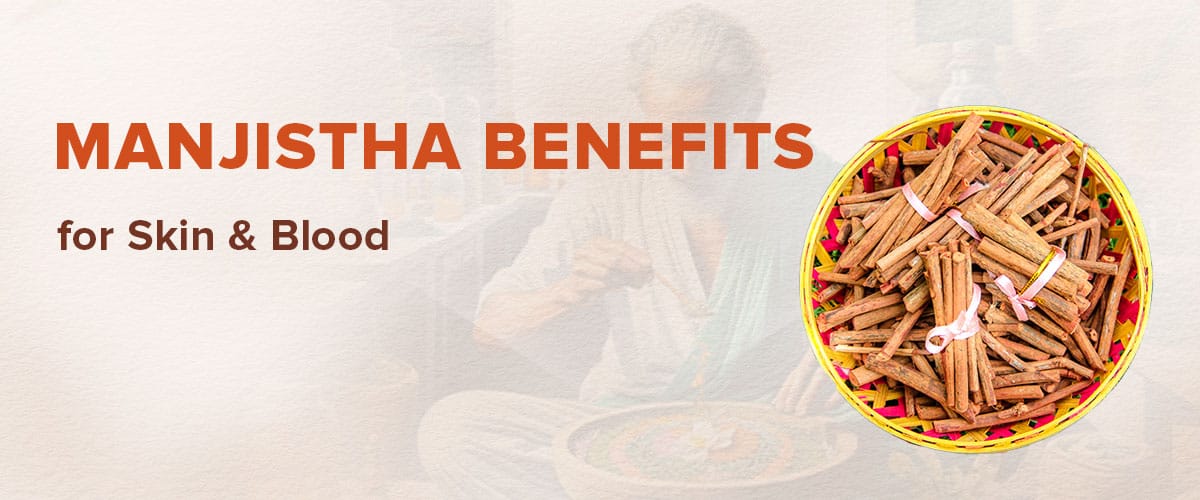
Manjistha is called a blood purifier in every article online, which is a phrase that means nothing physiologically and hides what the herb is actually for. It is a dye root, and the compounds that colour cloth are the ones that act on skin and small vessels.
What it is
- Rubia cordifolia, Indian madder, and the root is the part used. It was a dye plant long before it was a medicine, and the two histories are the same history.
- The related European madder, Rubia tinctorum, carries anthraquinone dyes that raised concern in animal feeding studies. The two species are not interchangeable and the market sells both under one word.
- Forms: root powder, decoction, tablets, and the herb inside skin formulations and pastes.
- It stains everything it touches: fingers, bowls, light clothing and the edge of a sink. Anyone who has ground it knows this and nobody warns them.
What blood purifying was reaching for
- The traditional category maps onto things visible in the skin and in small vessels: acne that leaves marks, eczema that oozes then crusts, bruising that lingers, and the dull congested look of long-standing skin inflammation.
- It is used alongside the actual skin treatment, never instead of it.
- It does not clean blood. Blood is not dirty. What it does instead is mildly anti-inflammatory and mildly diuretic, and that is enough to make it useful.
- The lymphatic tradition around it is the same pattern read from a different angle.
What it genuinely helps
- Inflammatory skin complaints that have been running for months, as one line in a plan with a defined review date.
- Old bruising and the heavy congested feeling in a limb, traditionally.
- Urinary burning in classical practice, once infection has been excluded by a urine test.
- Marks left behind by acne, slowly, and only where the pigment is superficial.
Where the marketing outruns the plant
- It does not clear melasma, and it does not lift pigment that has dropped into the dermis after steroid creams. No powder reaches that depth.
- It does not treat vitiligo. Anyone promising repigmentation with a churna is selling you something.
- It is not a substitute for the treatment of psoriasis, atopic eczema, or a drug eruption.
- A genuinely swollen gland or node needs a diagnosis first. Always. That is not a lymphatic herb case until someone has looked.
What goes wrong
- It adds to blood thinners. Bleeding gums, nosebleeds or easier bruising while taking it is a reason to stop and be seen.
- Photosensitivity in some people, who burn more easily than usual while on it.
- Contact allergy to the paste, showing as a red itchy rectangle exactly where it was applied.
- Liver readings can rise with long high-dose use, which is why unreviewed months of it are not safe.
- Not in pregnancy, and not alongside a transplant or an immunosuppressant plan without review.
- Stop before surgery and tell the surgeon what has been taken daily.
What we ask before it is started
- Which Rubia species, which form, how much, and for how many weeks so far.
- What the skin diagnosis actually is, because one word in English covers five conditions with different treatments.
- Any blood thinner, any transplant, any liver problem, any planned procedure.
- What has already been tried, and whether it was given properly for long enough to have answered.
Aksa physicians have been consulting on Ayurvedic care since 1992. In a free video consultation they will tell you whether manjistha suits your skin, what it can realistically change, and what needs to be diagnosed before a powder is started.
Every individual is different. This page is general education, not a prescription for you, and it cannot replace an examination.
More herbs
Ask a physician before you start
Aksa physicians have been consulting on Ayurvedic care since 1992. In a free video consultation they will tell you whether this herb fits your digestion, your current treatment and your routine.