
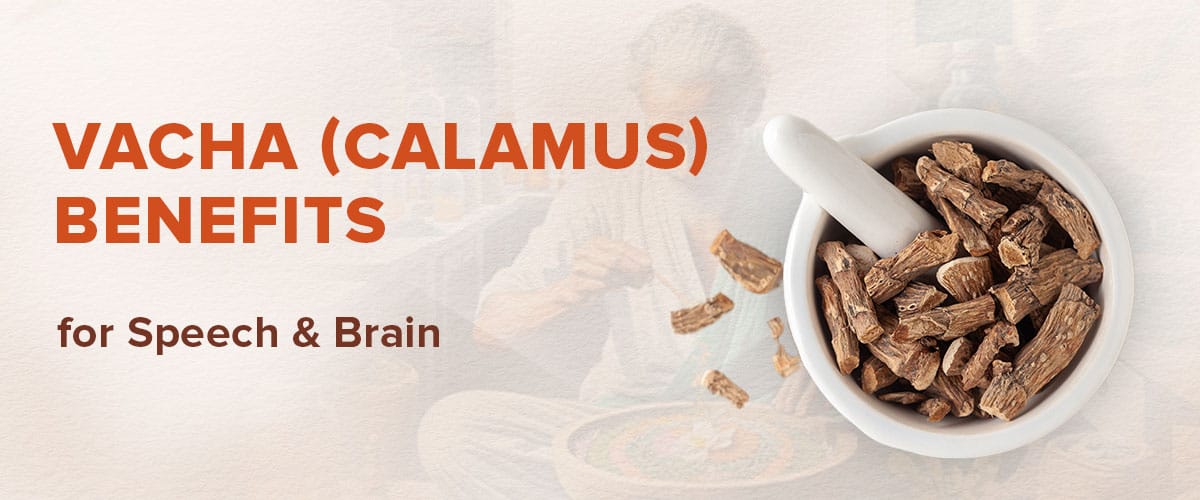
Vacha is the herb on this page that should not be bought and taken at home, and the reason sits in the plant itself: the variety most commonly sold carries a compound that caused cancer in animal feeding studies and is banned as a food flavouring in several countries.
What it is
- Acorus calamus, sweet flag, and the rhizome is the part used. In the hills it is sold as jeewan mool.
- There are two forms that matter: the smaller Indian diploid plant and the larger American triploid one. They are not chemically the same plant.
- The larger type carries high beta-asarone. Asarone caused intestinal tumours in rat feeding studies, and as a result asarone-containing flavourings are banned in food in the United States and restricted elsewhere.
- The Indian diploid carries far less, which is why the variety question is the whole safety question, and why a buyer at a general shop cannot answer it.
- The classical texts knew this herb was strong. It was almost always placed inside a formulation, in a small measure, usually after purification.
What it is used for
- In classical practice: the chest with thick congestion, certain speech and childhood complaints, and as an ingredient inside guggulu preparations and other compound tablets.
- Mouth and gums, as the traditional cleaning stick and as a wash for sore gums.
- As a carrier inside a physician's formula, where its job is to move the other herbs rather than to act alone.
- It has never been a standalone daily tonic, and the tradition does not support anyone treating it as one.
Why this one is a physician's herb
- The distance between the dose that is a medicine and the dose that is a poison is small on this plant.
- Purification, variety, and what it is combined with all change what the rhizome actually does.
- There is no safe household amount of unlabelled vacha powder, because the buyer has no way of knowing which Acorus is in the packet.
- Almost nothing on a normal consultation needs vacha when safer herbs do the same job.
What goes wrong
- Nausea and vomiting are usually the first sign of too much.
- In larger amounts there are reports of sedation followed by restlessness, and of seizures.
- It adds to sedatives and to alcohol.
- Not in pregnancy, not in children, and not in anyone with any seizure history.
- Long-term use of high-asarone material is the carcinogenicity question, and centuries of traditional use do not settle a question about a specific compound in a specific variety.
What does the same job more safely
- A chesty, congested cold in an adult: trikatu in a small measured amount, or pippali inside a formula, both of which are far better characterised.
- Sore gums: a plain salt rinse, a soft brush, and a dental examination, which is where the actual cause usually is.
- A child's speech concern: an audiology check and a speech therapy referral. No rhizome has ever fixed a hearing loss that was present all along.
- A physician who uses vacha does so inside a compound, in a small measure, with the variety known. That is the entire difference between the herb being reasonable and being reckless.
- Applied undiluted to gum it irritates and burns the lining.
What we ask before it is used at all
- Which Acorus, which part, purified how, and inside which formulation.
- Whether the complaint needs it, since very few do.
- Everything else being taken, especially sedatives, anti-epileptic medicine and alcohol.
- Whether the reason is a cough, a gum problem, or a speech concern in a child. Those are three situations where the real next step is an examination, and in the third one it is a therapy referral rather than a powder.
Aksa physicians have been consulting on Ayurvedic care since 1992. In a free video consultation they will tell you whether vacha belongs in your formula at all, and what should be used instead of it in almost every case.
Every individual is different. This page is general education, not a prescription for you, and it cannot replace an examination.
More herbs

Shankhpushpi: the herb for sleep and a busy mind
Read
Manjistha: the herb behind our skin-clearing protocols
Read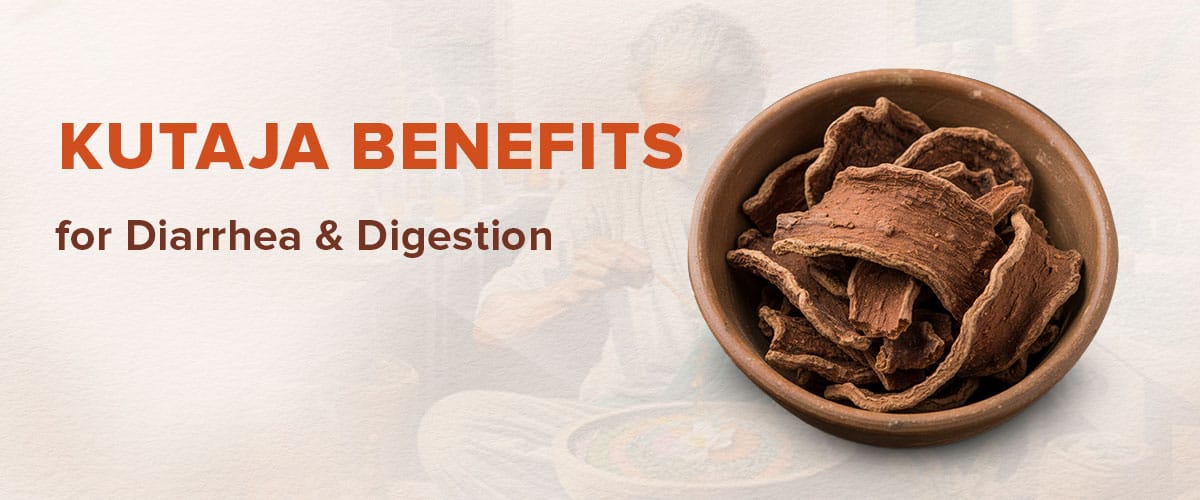
Kutaja: what Ayurveda uses it for in dysentery
Read
Giloy (Guduchi): what it is actually good for
ReadTulsi: how we use it in coughs and daily routine
ReadTriphala: the three fruits and what they do together
ReadAsk a physician before you start
Aksa physicians have been consulting on Ayurvedic care since 1992. In a free video consultation they will tell you whether this herb fits your digestion, your current treatment and your routine.