
7 home remedies to reduce hair loss and grow hair back

Some hair grows back, and some never does — the difference is not the remedy. Here is which loss reverses, on what timetable, and what actually helps.
A follicle that has been destroyed and replaced by scar tissue grows nothing, ever. A follicle that has been pushed into a resting phase by illness, dieting, iron deficiency or hormonal disruption grows hair again — once the cause is removed, and on a cycle that takes three to six months to become visible. Everything below is aimed at the second group, and the most valuable thing in this article is the honesty about which group you are in.
1. Remove the trigger before adding anything
- Diffuse shedding that began two to four months after a fever, surgery, childbirth, crash diet or a stretch of severe stress is telogen effluvium. It settles when the trigger has passed, and no remedy shortens that wait — the cycle is simply slow.
- Work backwards three to four months from the day the shedding started. That is where the answer usually is, and writing it down settles more anxiety than any oil.
- If shedding has continued past six months, or there is no identifiable trigger, that is an investigation rather than a longer trial at home: haemoglobin and ferritin, thyroid, B12 and vitamin D where the diet suggests them, and a scalp examination.
- Postpartum shedding follows a textbook curve — it starts around three to four months after delivery, is worst around five to six, and settles by the first year. Oiling does not beat that curve; patience does.
2. Protein and iron, taken seriously rather than symbolically
- A day of rice, roti and tea carries surprisingly little protein, and the follicle is the first thing the body economises on when intake falls short.
- A palm-sized portion of protein at both main meals — egg, fish, chicken, paneer, curd, soya, sprouts, dal in real quantity — is the working target, and roughly one gram per kilogram of body weight for a healthy adult. Anyone with kidney disease needs that number set by their doctor.
- Ferritin matters more than haemoglobin in menstruating women. A normal haemoglobin with a low ferritin still produces shedding, and it is missed constantly. Heavy periods, fatigue, breathlessness on stairs and brittle nails are the reason to test rather than to guess.
- Iron tablets, when prescribed, are taken with vitamin C and away from tea or milk, and continued for the months it takes to refill stores — not for a week until the packet feels finished.
3. Daily scalp massage — the measure with the most plausible mechanism
- Four minutes of moderate-pressure fingertip massage each day, dry or with a little oil. Small studies report increased hair thickness after months of consistent practice, plausibly through mechanical stimulation of the follicle.
- Fingertips and pads of the hand, moving the skin over the skull rather than rubbing the hair. Nails tear the shaft and aggravate any dermatitis.
- It works through months, not days; and it works whether or not the oil has anything famous in it, because the massage is the active ingredient.
- Do not massage a red, tender, pustular or infected scalp. That needs treatment first.
4. Treat dandruff as the scalp disease it is
- Flaking with itching is usually seborrheic dermatitis, and the inflammation itself increases shedding in the affected area. Treating it often reduces hair loss more than any tonic.
- Use a proper antifungal shampoo — ketoconazole, zinc pyrithione or selenium sulphide types — left on the scalp for three to five minutes before rinsing, two or three times a week for four weeks and then weekly for maintenance.
- Oil feeds the yeast involved. Heavy overnight oiling on a dandruff-heavy scalp typically makes it worse; if you oil, keep it short and wash it out properly.
- Do not scratch, and keep the nails short. Broken, weeping scalp skin invites bacterial infection.
- A thick, well-demarcated scaly plaque with silvery scale, or pitted nails, is psoriasis rather than dandruff and is treated differently.
5. Stop the mechanical pulling and chemical assault
- Traction is one of the few genuinely preventable causes and it becomes permanent: tight ponytails and buns worn daily, braids kept in for weeks, heavy extensions, a comb forced through wet hair, and vigorous towel-rubbing.
- Vary the parting and the position of any tied style, detangle on damp hair with a wide-tooth comb from the ends upward, and let extensions rest between fittings.
- Bleach, rebonding, perms and hot straighteners break the shaft; use the lowest effective heat, condition the lengths, and stop immediately if the scalp stings, reddens or blisters.
- Skip daily shampoo if the hair is dry; shampoo regularly if the scalp is oily. Those are different scalps and one rule does not fit both.
- Rinse chlorine and salt water out promptly, and cover the head in strong sun.
6. Nutrition, sleep and the two habits worth changing
- Long-term strict vegetarian diets commonly run short of vitamin B12, and deficiency produces shedding along with fatigue and numbness. That is a measurable, correctable thing — test it rather than dosing blindly, especially because B12 masks folate deficiency.
- Crash dieting and skipped meals cause more hair loss than any shampoo cures.
- Sleep of seven hours; chronic shortfall raises physiological load and pain sensitivity alike.
- Smoking is a vasoconstrictor and the follicle is a vascular organ; it is also associated with earlier greying. Quitting is on this list for a reason.
- Unrestrained stress management matters: trichotillomania (pulling), traction from tight styles adopted during low mood, and the shedding after sustained anxiety are all common and rarely volunteered.
7. Track it properly, so you know whether anything worked
- Photograph the same parting, in the same light and from the same distance, once a month. Memory is unreliable and photographs are not.
- Judge at three and six months, never at two weeks: the growth cycle guarantees a lag between cause, treatment and visible result.
- Hold one thing at a time constant. Changing oil, diet, shampoo and medicine all in the same fortnight makes the result unreadable, which is exactly why so many people cycle through remedies indefinitely.
- A fair rule: a plan deserves three to six months of honest adherence. If there is no change by month six, that is information, not failure — and it points to a dermatologist rather than a bigger bottle.
What will not grow back from home treatment
- A receding temple line or thinning crown in androgenetic alopecia. It has established medical treatments and preserves more the earlier they start; a year of experimenting is a year of unrecoverable density.
- Any area that looks shiny and smooth with no visible follicle openings — scarring alopecia is a dermatology urgency.
- Round smooth patches of alopecia areata, or loss of eyebrow and lash hair; those need their own treatment.
- Scalp ringworm, especially in children: it needs prescribed oral antifungal treatment, and delay causes permanent loss. Oil makes it look worse and spread further.
- Shedding from chemotherapy, a medicine, thyroid disease or iron deficiency anemia — the cause is the treatment.
Get the scalp examined promptly if
- Loss came in patches, or the eyebrows and lashes have thinned.
- The scalp is red, scaly, painful, pustular or weeping, or there are black dots and broken hairs.
- Shedding has run beyond six months, or comes with fatigue, weight change, palpitations or an irregular cycle.
- There is an itchy, scaly patch on a child's scalp with swollen glands behind the ear.
- Hair loss followed a new medicine, or came with a fever, rash or joint pain.
How we work with hair cases at Aksa
At our two centres a hair complaint is taken as a medical history first — the last four months, the ordinary day's food, menstrual blood loss, family pattern, medicines, styling — and examined under good light before anything is prescribed. Blood work is ordered on the basis of that history, not as a package. Internal and external herbal support is then used for the patterns where it genuinely helps, alongside a defined plan, a review date and an honest statement about what to expect. Androgenetic, scarring and infective loss are referred to a dermatologist rather than held, because in those patterns delay costs hair permanently. Bring previous reports to either centre and let us identify the type before recommending the routine.
Related reading

3 Ayurvedic remedies to control hair loss
Read
5 natural ways to control hair loss and greying
Read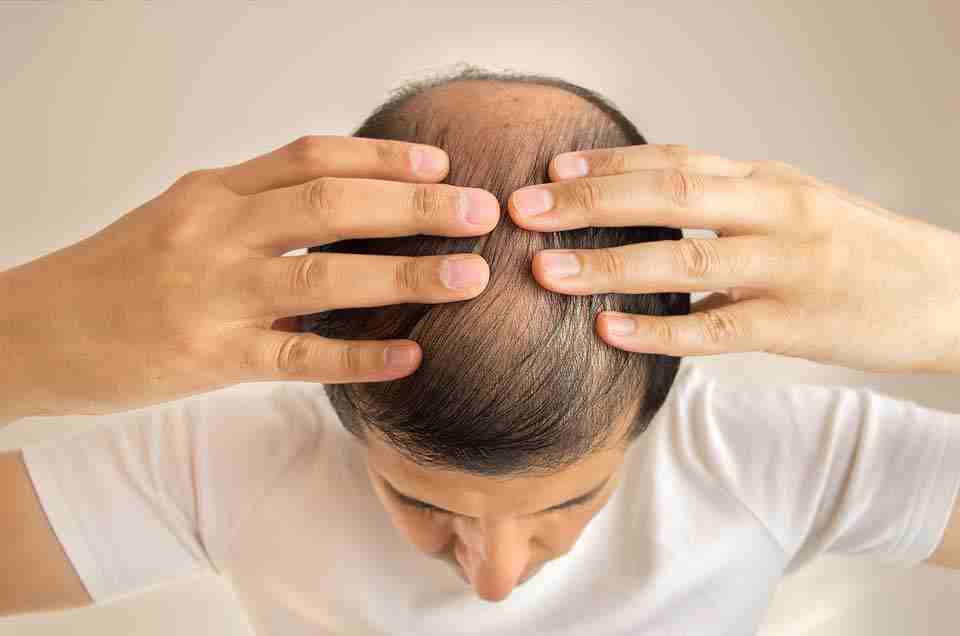
Dandruff, hair loss and early greying: treating all three
Read
Foods that help stop hair loss naturally
Read
Hair loss and early greying: 5 natural remedies
Read
Hair loss in teenage boys: what actually helps
ReadTake the next step on your own case
Aksa physicians have been consulting on Ayurvedic care since 1992. Book a free video consultation and get a routine built around your digestion, sleep and history.