
Eating habits Ayurveda recommends in diabetes are about how and when you eat - order on the plate, portion, chewing and the clock - not another forbidden-food list.
We have already written the five foods we ask diabetes patients to drop, and the daily do's and don'ts. This piece is the other half: the manner of eating. Two people can eat the same roti, the same dal and the same sabzi and get different sugar curves, because one ate it slowly at a fixed time and the other ate it fast at eleven at night after skipping lunch. Ayurveda noticed this long before continuous glucose monitors existed, and called it agni, matra and kala - the digestive fire, the quantity, and the timing. Here is what that means at an Indian table.
The order of food on the plate
Start the meal with the fibrous and the protein, and let the starch come after. In practice: a few bites of salad or cooked vegetable first, then dal, curd, egg or paneer, and only then the roti or rice.
- Fibre and protein slow the stomach's emptying, so the starch that follows arrives into the blood more gradually.
- The same plate, reordered, produces a lower and flatter after-meal rise than the starch-first version.
- This is not a trick that lets you eat unlimited rice. The portion still matters; the order only smooths what the portion does.
Portion: the hand measure, not the heap
Ayurveda's quantity rule is simple enough to use without a scale: eat to about three-quarters of fullness, and stop while you could still eat a little more. The classical warning is against eating until the stomach is packed, because a packed stomach is exactly where sluggish digestion and weight around the middle begin.
- Half the plate vegetables and salad, a quarter protein, a quarter starch - the same plate rule we use for fatty liver, because the metabolic problem is shared.
- One helping, not two. If you are still hungry after twenty minutes, drink water and wait; true hunger settles, craving does not.
- Serve from the kitchen, not from bowls left on the table. Second helpings happen because the food is within reach, not because the body asked.
Chewing and pace: the cheapest medicine on the table
Digestion begins in the mouth, and a meal swallowed in eight minutes is a meal the gut has to handle whole. Eating slowly also gives the satiety signal time to arrive, which is why fast eaters overshoot their portion almost every time.
- Put the spoon down between bites. Aim for a meal that takes twenty minutes, not eight.
- No screens at the table. A distracted eater neither tastes nor notices fullness.
- Chew each mouthful until it is soft. This matters more for raw salad and whole grains than for khichdi.
The clock: fixed meals, light evening
Agni in the classical picture is strongest around midday and weakest at night. Modern chronobiology says much the same thing in different words: insulin sensitivity is better earlier in the day, and a late heavy meal is handled worse than the same meal at noon.
- Three meals at roughly fixed times, with the largest at midday and the lightest in the evening.
- Finish dinner three hours before bed. A late dinner is one of the most reliable ways to raise the next morning's fasting sugar.
- Do not skip breakfast and then compensate at night. The skipped meal does not save sugar; it relocates it to the worst hour.
- If a gap between meals is long, a small planned snack - nuts, buttermilk, a fruit - beats an unplanned binge.
Warm, cooked and simple over cold and complex
Ayurveda favours warm, freshly cooked, lightly spiced food for a sluggish metabolism, and it is easy to see why in practice: cooked vegetables and dal are easier to digest than a cold sandwich eaten on the run, and they carry fibre and protein together.
- Prefer cooked vegetables, dal, khichdi, soups and lightly spiced curries over cold packaged meals.
- Use ginger, cumin, coriander, fennel and a little black pepper as routine kitchen spices; they make the meal digestible without adding sugar or fat.
- Keep cold sweet drinks away from the meal entirely. They add sugar at the exact moment the starch is arriving.
- Warm water or a thin buttermilk through the day; sip, do not flood the meal with liquid.
What these habits do not do
Habits smooth the curve; they do not replace the treatment. Where a doctor has prescribed metformin, insulin or anything else, that continues unchanged. A person on insulin who changes meal timing or portion must tell the prescriber, because the dose is matched to the meal.
- No habit dissolves a diagnosis. Type 1 diabetes needs insulin regardless of how beautifully the plate is ordered.
- These habits are not a licence to stop monitoring. The fasting value and HbA1c still get repeated on schedule.
- If sugar stays high despite a good routine, the answer is a review of the treatment, not more restriction at the table.
The plate in practice: three Indian meals reordered
- Breakfast: vegetable poha or upma with a bowl of curd and a few nuts - vegetable and protein first, the starch after; or two eggs with a roti and salad. Not a sweet biscuit and chai on an empty stomach.
- Lunch: salad and a green vegetable first, then dal or curd, then one or two rotis or a modest rice portion. Eat at a table, at a fixed hour, without the phone.
- Dinner: a light khichdi with vegetables and a little ghee, or soup with paneer, finished three hours before bed. The evening is not the place for the day's largest meal.
Habits that fail, and why
- Skipping meals and compensating later: the skipped meal does not save sugar, it relocates it to the worst hour and guarantees an overshoot.
- Eating while working or scrolling: pace and fullness both disappear, and the portion creeps up without anyone noticing.
- Liquid calories: sweetened chai, juice and cold drinks arrive with no fibre and no satiety, at the exact moment the starch is landing.
- The healthy sweet: jaggery, honey and dates still raise sugar. A smaller portion of a sweet is a portion of sugar, whatever the label says.
- The weekend reset: five good days and two free days average out to a free week. The curve does not know it is Sunday.
How to know the habits are working
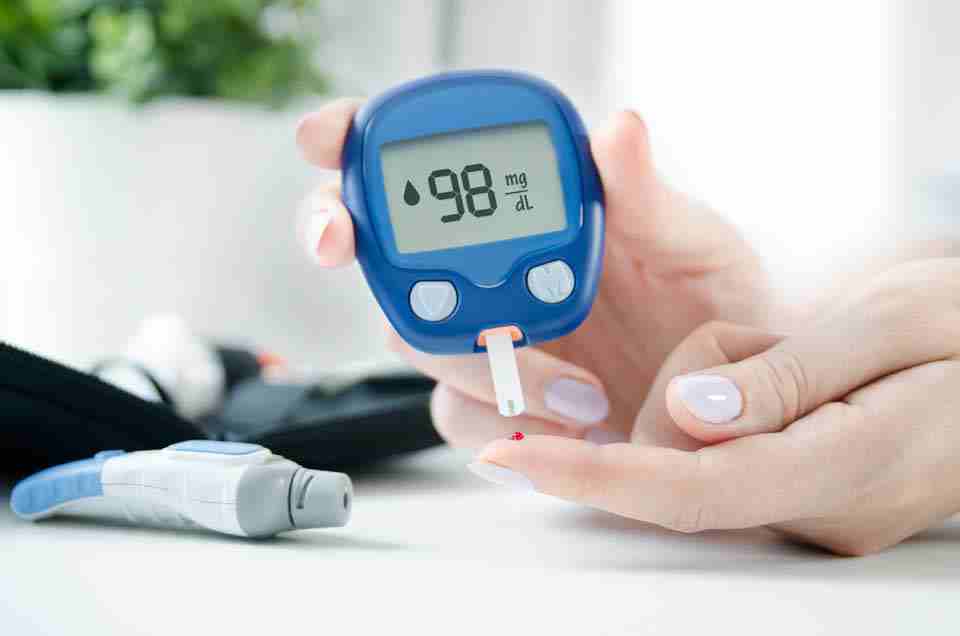
If you use a home meter, the useful reading is the after-meal value two hours from the first bite, paired with what was eaten and in what order. A week of those pairs shows which meal and which habit move the number.
- Fasting glucose and HbA1c at about twelve weeks, not every week.
- Weight and waist monthly; the waist is the more honest of the two.
- Expect a smoother after-meal curve within weeks and a better HbA1c over months. If neither moves, the treatment needs review, not more restriction.
Where we fit in
At our two centres in Delhi, Model Town and Burari, the diabetes sitting goes through the day's eating as a timeline - what time, how much, in what order, with what drink - before any herb is discussed. The plan is written as habits with a review date, and the same two tests are repeated at the end of it so the change is measured, not assumed.
Aksa physicians have been consulting on this since 1992, and a video consultation is free and needs no travel. What we add is the routine work and honest guidance on which stage is reversible; what we never do is tell someone to trade their prescribed medicine for a kitchen rule.
Every individual is different. Before changing any medicine, dose or routine, please consult the qualified doctor who prescribes your diabetes treatment. Nothing in this article replaces that relationship.
Related reading





Take the next step on your own case
Aksa physicians have been consulting on Ayurvedic care since 1992. Book a free video consultation and get a routine built around your digestion, sleep and history.