
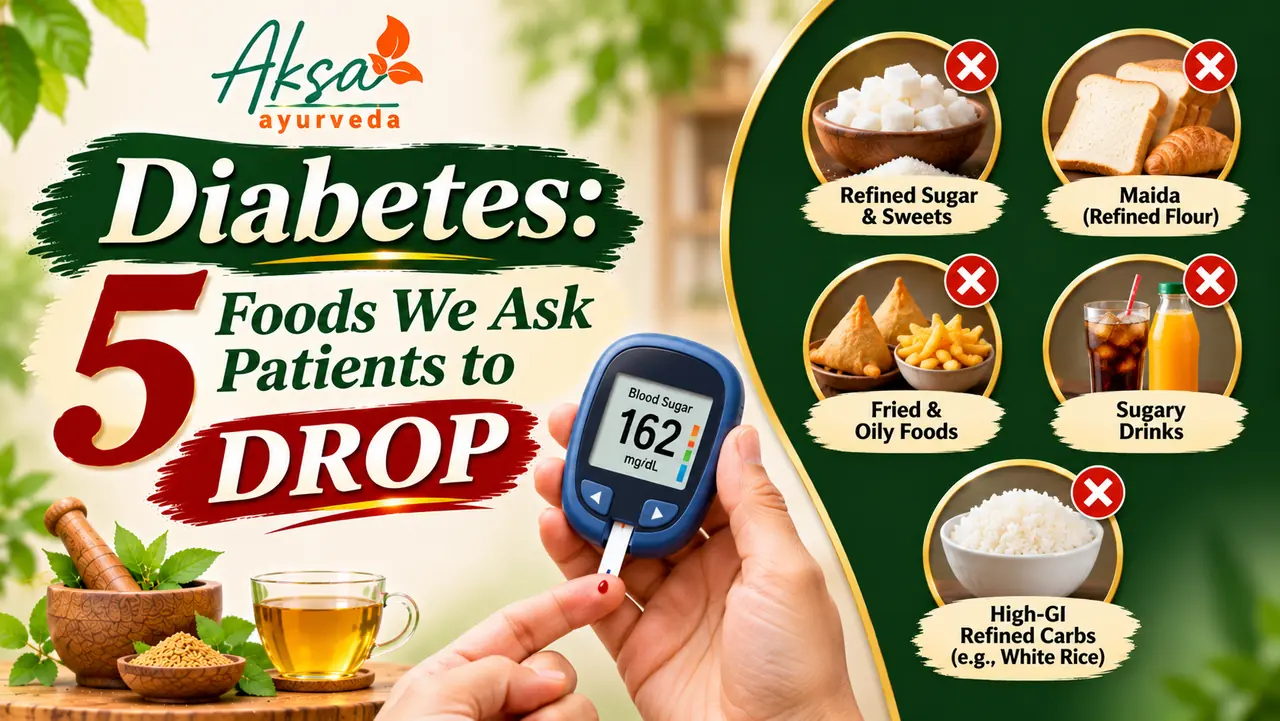
No single food causes diabetes and none cures it. Five things we ask patients to cut back on first, why each one moves the numbers, and what goes in their place.
A word before the list. Type 1 diabetes is insulin-led and diet never replaces insulin; anyone with Type 1, gestational diabetes, or Type 2 on insulin or sulfonylureas should make changes only with their treating doctor, because medicines often need reducing as food changes. What follows is for the far more common situation — Type 2 diabetes and prediabetes — where the goal is a flatter rise after meals, steady weight and no hypoglycaemia.
1. Liquid sugar — tea, coffee, cola, packaged juice, energy drinks
- A 300 ml cola has around eight teaspoons of sugar in it and takes seconds to absorb; there is no fibre, no chewing, no fullness, and the rise in blood glucose is close to immediate.
- Fruit juice is the trap in this group. Even without added sugar, juicing removes the fibre matrix and leaves the sugar, so three oranges go down as easily as one and hit the liver far harder.
- Flavoured buttermilk, lassi with sugar, malted health drinks, sweetened lime water and most café coffee drinks belong here too.
- What replaces them: water, plain jaljeera without sugar, buttermilk with roasted jeeraka and salt, black coffee or tea without sugar, and whole fruit — one portion at a time, not four.
- Check labels for sugar under its other names: syrup, maltose, dextrose, fruit concentrate, jaggery and honey all count. Brown is not better than white to a glucose meter.
2. A plate made entirely of refined carbohydrate
- Maida products — white bread, biscuits, rusks, namkeen, pasta, cake, samosa and patty pastry — digest fast and leave almost nothing behind nutritionally.
- The classic mistake at home is a plate of only white rice, or only potatoes, or only bread. Any of these alone raises glucose sharply, whatever the oil used to cook it.
- The fix is not no carbohydrate, it is a smaller portion of a better one with everything else on the plate: half the plate vegetables, a quarter protein, a quarter carbohydrate, and some fat. A cup of rice instead of three, with a bowl of poriyal or sabji and dal or curd alongside, behaves very differently in the body.
- Switch to the less-refined versions you already like: unpolished or red rice, millets like thinai or vari, whole wheat rotis instead of maida, oats rather than instant flavoured packets.
- Cook, cool and reheat rice or potatoes. Cooling forms resistant starch, which blunts the rise; this is a real effect, though a modest one, not a licence for a large serving.
3. Deep-fried food and the habit of snacking on it
- A heavy fried meal does not spike glucose sharply; it makes it stay high for four to six hours, which is why the reading after a party dinner is so confusing. Fat slows gastric emptying and worsens insulin resistance for hours.
- Fried snacks are usually fried carbohydrate, which combines the two worst features on this list.
- Vanaspati, reused bakery oil and repeated deep-frying at home contribute to the fat quality problem independently of sugar.
- What works: shallow cooking in a measured teaspoon of oil, pressure-cooked and steamed items, and roasting instead of frying. Keep the festival frying for festivals and make it the exception of the week rather than the default of Tuesday.
4. Processed and cured meat, and the sweetened health bandwagon
- Sausage, salami, packaged chicken nuggets, and the salt-heavy marinades that go with them are problems for blood pressure and heart risk, which matter more in diabetes than in the general population.
- Protein itself is welcome at every meal — egg, fish, chicken, dal, paneer in moderation, curd, soya. The issue is what the food industry wraps around it.
- The other half of this item is the diabetes-friendly aisle. Sugar-free biscuits are made of maida and fat; diabetic chocolate still raises calories; malt-based drinks for the elderly are frequently sugar in a health box. If the packet claims to control sugar, read the ingredient list.
- Herbal proprietary powders are not a substitute for prescribed medicine, and several interact with it. Do not stop metformin because a supplement arrived, and never skip insulin.
5. Portion size and the timing of eating
- This is the item that changes results most reliably, and it has nothing to do with which food is on the menu. A small plate of the right food beats a large plate of moderately good food.
- Two Rotis is a meal decision; four is a different meal. Use a smaller plate, serve once, and do not eat from the serving bowl.
- Long daytime gaps followed by a large dinner push glucose up where it matters most, because insulin sensitivity is lower in the evening. A modest dinner, eaten early enough that you are not going to bed with a full stomach, suits most people.
- Night eating after brushing — tea and biscuits, a plate of fruit — is the habit quietly behind many high fasting readings.
- Alcohol on an empty stomach is a specific hazard for anyone on insulin or sulfonylureas: it can cause delayed hypoglycaemia hours later, including through the night.
What we ask patients to keep, not only drop
- Vegetables in quantity, especially leafy ones and the local greens; they provide the fibre that steadies everything else.
- Protein at breakfast. A breakfast of dal, egg, paneer or sprouts changes the whole day more reliably than the same carbohydrate breakfast with a supplement added.
- Curd and buttermilk, unless there is a specific reason to avoid dairy.
- A ten-minute walk after the two main meals. This lowers post-meal glucose by an amount that patients can see on their own meter.
- Sleep of seven hours. One short night measurably worsens insulin resistance the next day.
- Water. Thirst and high sugar drive each other, and people often mistake dehydration hunger for appetite.
The honest limits of diet alone
Diet and walking are the foundation of Type 2 management, and in early prediabetes they can bring readings back into the normal range. They are not a promise, and they are not a licence to stop prescribed medicine. Diabetes damages the eyes, kidneys, nerves and feet through years of modest elevation, not through one bad meal — which is why monitoring matters as much as food: HbA1c at the interval your doctor sets, kidney and urine tests, blood pressure, and a yearly eye and foot check. Anyone on medication who changes their diet substantially should be reviewed, because doses commonly need reducing and continuing the old dose on a new diet is how hypoglycaemia happens.
Get medical attention the same day for vomiting with abdominal pain and breathlessness, confusion, a very high reading with ketones, or a hypo you cannot correct with sugar.
How we help at Aksa
At our two centres the diabetes consultation begins with what you actually eat on an ordinary day, your current medicines, your recent reports and your weight pattern — never with a generic diet chart downloaded from the internet. From there we build a plan around your kitchen, your working hours and your budget, add herbal support where it genuinely helps the metabolic picture, and schedule reviews so that numbers, not optimism, decide whether the plan is working. Anyone on insulin is told plainly that insulin continues. If you have prediabetes on a report and no plan yet, bring the report to either centre and let us put one together.
Related reading


Take the next step on your own case
Aksa physicians have been consulting on Ayurvedic care since 1992. Book a free video consultation and get a routine built around your digestion, sleep and history.