
Anal fissure: how to ease the pain while it heals
A fissure heals when the stool stops reopening it. Here is how to keep the wound quiet, what not to apply, and when six weeks changes the plan.
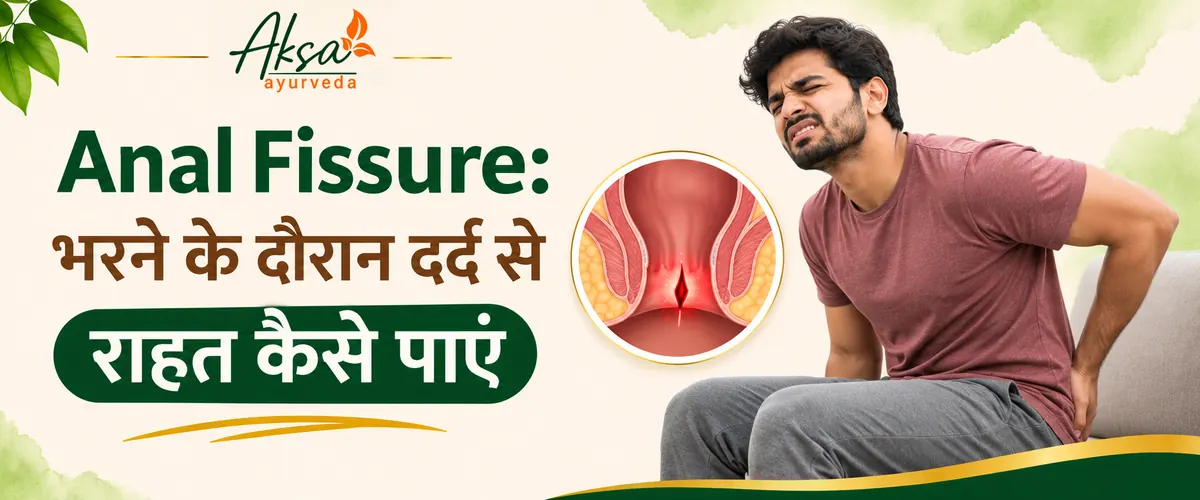
An anal fissure is a small tear in the lining just inside the anal canal. It hurts in a very particular way: a sharp, cutting pain during a bowel movement, then a burning ache that can linger for hours afterwards, sometimes with a few streaks of bright red blood on the paper. Almost all of it starts with one hard, large stool passed while straining.
The single rule that decides whether it heals
The tear is reopened every time hard stool passes over it. Until the stool is consistently soft, no ointment will close it properly. So the treatment is not primarily applied to the outside — it is taken inside through water, fibre and timing.
- Water through the whole day, not two glasses at dinner. Fibre without water produces the opposite of what you want.
- Add fibre gradually: vegetables, dal with its fibre intact, whole grains, fruit with the peel where edible, curd with rice.
- Isabgol or psyllium husk with a full glass of water at night is a reasonable short-term support, and it is worth confirming the amount with a physician or pharmacist.
- Do not skip or delay the urge. Waiting until evening turns a normal stool into a dry, hard one.
- Never strain. If nothing is coming, get up, walk, and return when the urge is real.
- A footstool under the feet while sitting on a Western toilet puts the hips in a better position and reduces pushing.
Easing the pain while it closes
- A sitz bath: sit in a few inches of comfortably warm, plain water for ten to fifteen minutes, once or twice a day and always after a bowel movement. Nothing needs to be added to the water.
- Wash with plain water after a motion instead of wiping with dry paper, then pat dry with a soft cloth. Soap directly on the area usually stings and dries the skin.
- Keep the area dry and airy; tight synthetic underwear traps moisture and aggravates the burn.
- A short walk daily helps bowel rhythm; prolonged sitting on a hard surface usually increases discomfort.
- Sleep enough. Pain tolerance drops sharply when you are tired, and the second day of a fissure is often worse than the first for that reason alone.
What not to do
- Do not keep applying steroid or numbing creams day after day on your own. Numbness invites harder straining, and long steroid use thins the skin around the tear.
- Do not use someone else's prescription ointment, or a mixture bought because it worked for a relative.
- Do not insert anything into the canal to clean it. The tear is not caused by dirt and will not heal from inside by scrubbing.
- Do not treat a fissure as piles. They are different problems with different treatment, and the two can also exist together.
- Do not ignore constipation once the pain settles. That is when most people stop the water and fibre, and the fissure returns within weeks.
How long is honest
A fresh fissure with soft stool and sitz baths usually settles within two to three weeks. Pain easing does not mean the skin has finished closing, so keep the stool soft for a few weeks more.
A tear that has been present or recurring for more than six weeks tends to change character: the edges thicken, a small skin tag or sentinel pile appears at the opening, the sphincter goes into spasm, and the pain pattern shifts. At that stage home care alone frequently stops being enough, and an in-person examination decides what comes next rather than another tube of ointment.
When to get examined without waiting
- Bleeding that is more than a few streaks, dark blood, or blood mixed into the stool.
- Pus, a foul discharge, fever, or swelling around the opening — those suggest an infection or a fistula, not a simple tear.
- Pain so severe that you cannot sit, pass stool, or sleep despite the steps above.
- A fissure that keeps returning, or sits off to the side rather than in the midline.
- Any tear in a person with diabetes, on long-term steroids, with low immunity, or with unexplained weight loss or a change in bowel habit.
- New bleeding or pain over the age of forty, where the diagnosis should be confirmed rather than assumed.
How Aksa handles it
Our physicians start by confirming that it is a fissure and nothing else, then work on the two things that actually close it: the stool and the spasm. Internal treatment is prescribed per person to relax the bowel pattern rather than as a fixed piles package, and the plan is reviewed as healing changes the picture. Constipation is treated as the underlying problem, not as a separate complaint, because leaving it alone is what brings the tear back.
This can begin as a free video consultation, which is often enough to sort out the stool and the routine. When an examination is needed, we work from two centres in Delhi, Model Town and Burari, with timed appointments and the same clinical routine at both.
Every individual is different. This page is general education, not a prescription for you, and it cannot replace an examination.
More home remedies




Ask whether this remedy fits you at all
In a free video consultation an Aksa physician reads the complaint against your digestion, sleep and history, and tells you plainly what a home remedy can and cannot do for it.