
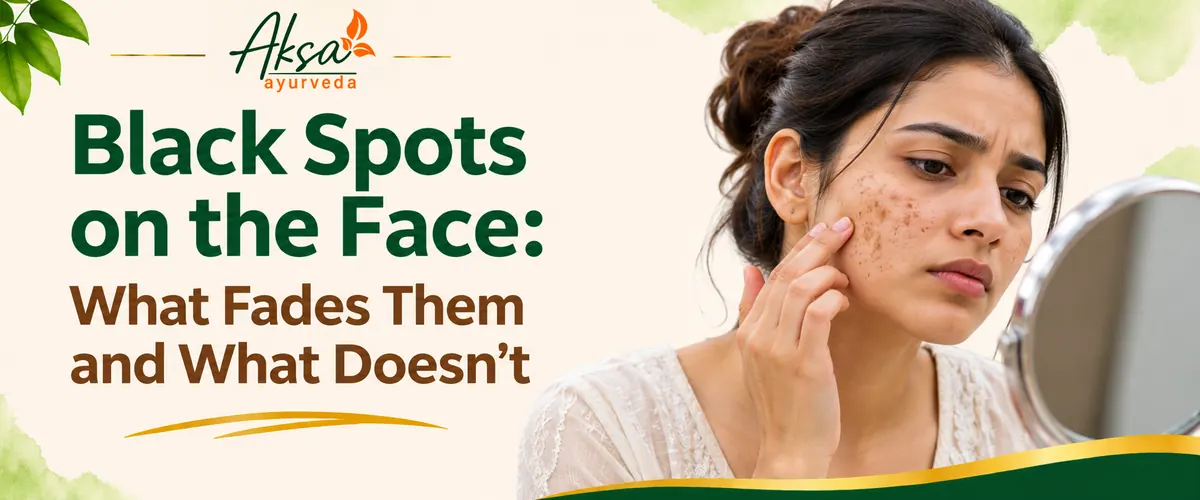
A tan is melanin the skin has made, not dirt on it. It fades as the stained layers shed, so the routine that works is the one that stops new pigment and helps the surface turn over.
What the skin is actually doing
Ultraviolet light injures the cells in the upper layers. The skin answers by making more pigment and pushing it upward, so that the next dose of light does less damage. That answer is the tan. It is the skin working correctly, which is why it cannot be scrubbed off.
It is uneven for plain, boring reasons. Parts of the face that take shade stay light while exposed parts darken.
- The bridge of the nose, the cheeks and the forehead catch the most light and go first.
- Skin covered by spectacles, a mask, a cap brim or the parting of the hair stays pale, and leaves a hard line when the tan fades.
- The side of the face nearest the car window is often darker than the other, because ordinary side glass lets a good deal of the tanning rays through.
- Skin that was recently irritated, by a pimple, a scratch or a harsh cream, darkens more over that spot and holds the colour longer.
The step that decides everything else
Nothing on this page works while the sun is still landing on the skin every day. Sunscreen is not a cosmetic addition here; it is the treatment.
- A broad-spectrum SPF 30 or higher, every morning, on the whole face and neck, including cloudy days.
- Two finger-lengths of product for the face and neck. Most people apply a third of what the number on the bottle assumes.
- Reapply when you are out in it, at least every three hours. Sweat and a handkerchief both remove it.
- Shade, a cap with a brim, and the honest habit of being indoors between ten in the morning and three in the afternoon.
- Sunscreen on the neck and ears if the face is going to look lighter than them, which is the usual mistake.
Packs and habits that genuinely help
These fade a tan slowly, over weeks. Anyone promising a fairness result in three days is selling something.
- Besan with curd and a pinch of turmeric, fifteen minutes, twice a week. The lactic acid is mild and the paste lifts surface oil evenly.
- Sandalwood paste on warm, reddened skin. It is cooling, which is what an irritated tan actually wants.
- Fresh aloe gel from the leaf, or a pure store-bought gel, on the face after a hot day.
- A compress of cold milk or rose water for ten minutes when the skin feels tight and hot after being out.
- Cucumber or potato pulp on the darker patches for fifteen minutes. Traditional, harmless, mild.
- A gentle exfoliant once a week, not more. The point is to help the stained surface shed, not to strip it.
- A plain moisturiser every night. Dry, flaking skin sheds unevenly and a fading tan looks patchier than it is.
What to stop doing
- Straight lemon juice on the face. It is acidic enough to irritate, and citrus on skin that then goes into the sun makes fresh dark marks.
- Toothpaste, bleach cream, or a kitchen scrub left on overnight.
- A facial or chemical peel every week, and any scrub with crushed nut shells in it.
- Any tube from the chemist counter that contains a steroid, used to calm the itching or redness. It lightens the mark briefly and then makes it worse and thinner-skinned.
- Skipping sunscreen because the day looks dull, or because you are sitting near a window.
- Rough towel drying the face after a wash.
What Aksa looks at
Pigmentation is one of the complaints our skin clinic sees every week, and the first question is never which cream to use.
- Whether the colour is a tan at all, or melasma, or the flat mark a healed pimple left behind. Each behaves differently.
- Whether a medicine you take is making the skin light-sensitive, which is common and easy to miss.
- Sleep, digestion and the state of your monthly routine, which decide how fast the surface turns over.
- Whether the pattern follows a mask line, spectacle line or a sari pallu, which tells you exactly where the light is coming from.
How long before you see it
- Skin at the surface renews in roughly four weeks, so a real change is a four-to-eight week business, not a week.
- If you stop the sun properly, the tan fades on its own even without packs. The packs shorten it.
- Darker marks left by pimples take longer than the tan itself, sometimes three to six months.
- Nothing here changes your natural colour, and nothing should.
When to have it looked at
- Patches that itch, burn, sting or flake, rather than simply looking darker.
- One patch that is darker than the rest and has not faded after three months of shade.
- Grey, blue or black colour, or a mark with an irregular border that is growing.
- Symmetrical dark patches over the cheeks, brow and upper lip, which is melasma and needs a different plan.
- Darkening that began with a new medicine, a new cream, or after pregnancy.
- Skin that has become thin, shiny or visibly veined after using a counter cream on it.
In a free video consultation an Aksa physician reads the pattern on your face against your routine and your medicines, and tells you plainly which of the four things you are actually dealing with.
Every individual is different. This page is general education, not a prescription for you, and it cannot replace an examination.
More home remedies


Ask whether this remedy fits you at all
In a free video consultation an Aksa physician reads the complaint against your digestion, sleep and history, and tells you plainly what a home remedy can and cannot do for it.