
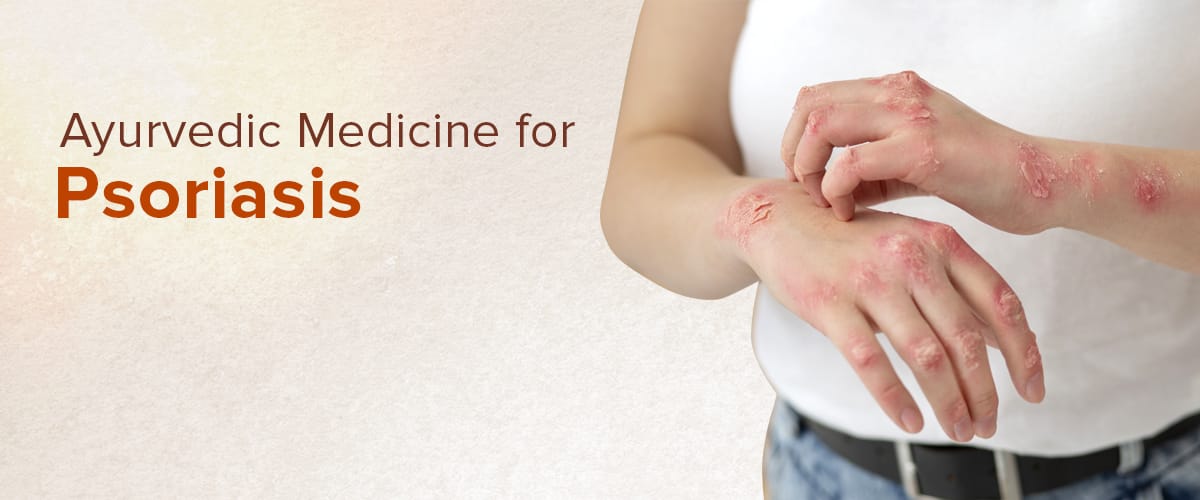
Psoriasis is an immune disease with a skin signature, not a skin disease with an immune explanation. It is lifelong, it is not contagious, and it can be controlled far better than most people are told it can be.
What it is, and what it is not
- The skin renews itself far too quickly, and the result is a thickened, red, scaly plaque with a silvery scale, usually on elbows, knees, scalp, lower back and nails.
- It is not an infection. It is not fungal, it does not spread from contact, and a swimming pool has nothing to do with it.
- It runs in families, and it comes in waves for reasons that are often findable.
- It is not eczema, though inverse psoriasis in the folds and on the genitals is misdiagnosed as fungal or eczematous for years.
- It is not caused by impure blood, and the idea that a purge or a detox clears it has cost people a great deal of time and money.
The triggers worth hunting
- A sore throat, particularly streptococcal, which sets off guttate psoriasis in children and young adults, sometimes dramatically and all over the trunk.
- Skin injury: a scratch, a vaccination, a burn, a tight shoe. Lesions appear along the line of injury, which is called the Koebner phenomenon and is a useful diagnostic clue.
- Stress and poor sleep, which are real and well-documented flarers rather than moralising.
- Smoking and alcohol, both of which worsen it and both of which reduce how well treatment works.
- Weight, particularly central obesity, because fat tissue is itself inflammatory. This is one of the few modifiable things with a genuine effect.
- Certain drugs: lithium, beta-blockers, antimalarials, and withdrawal of oral steroids, which can produce a severe rebound.
- Winter. Dry skin and less daylight make almost everyone worse.
What we prescribe
- Khadirarishta and manjistha are the classical pair for skin, and they are the usual base of an Ayurvedic course.
- Guduchi as the anti-inflammatory through a long course, which it tolerates well.
- Panchatikta ghrita, the five-bitter ghee preparation, where the picture is dry, thick and scaly. It is genuinely useful for the scaling and it is calorie-dense, so the dose is small and considered.
- Triphala guggulu where the bowel has been sluggish alongside, and kaishora guggulu where the plaques are red and inflamed.
- Neem preparations, internally in a short course and externally as an oil or paste. Neem is unpleasant and occasionally effective; the evidence is thin and the tradition is long.
- Karanj and nimb taila applied to plaques, which is where topical herbal work earns its place.
- Emollients, emollients, emollients. Not herbal, not glamorous, and the single most useful daily thing on this list. A plaque that is kept greasy itches less, cracks less and looks better.
- Scalp: a keratolytic to lift the scale before anything else is applied, because putting a preparation on top of half a centimetre of scale does nothing.
What the conventional side does, and why it matters
- Topical steroids and vitamin D analogues for plaques, in the right strength for the right site, with a defined schedule rather than continuous use. Face and folds need weaker agents; the scalp needs a vehicle that penetrates hair.
- Phototherapy, narrow-band UVB, which is one of the most effective and least discussed treatments available and is offered in government and teaching setups.
- Methotrexate, acitretin and cyclosporine for moderate to severe disease, and biologics for the cases that used to be hopeless. These have changed what severe psoriasis means for a person.
- Coal tar and salicylic acid for thick plaques, old, smelly, and still useful.
- A person with widespread psoriasis who is offered only a herbal cream is being under-treated, and we say that plainly.
What herbal medicine will not do
- It will not cure psoriasis. Nothing does. It is a relapsing condition and the honest goal is long quiet periods.
- It will not clear nail psoriasis, which is one of the most stubborn sites and often the one that matters most to the person.
- It will not stop joint damage. See the section below, which is the most important part of this page.
- It will not make a severe, generalized case mild on its own.
- Strong oral steroids are generally avoided in psoriasis precisely because of the rebound, and this is one place where a quick fix is genuinely the wrong treatment.
The joint question
- Around one in five people with psoriasis develops psoriatic arthritis, and it is frequently missed for years because the skin is mild and the joints are the problem.
- Suspect it with morning stiffness over half an hour, a whole finger or toe swollen like a sausage, pain at the heel or the sole, or a spine that has become stiff and painful in a young person.
- It damages joints permanently, and the drugs that prevent that are the disease-modifying ones prescribed by a rheumatologist.
- If any of those symptoms are present, this is a referral before it is a prescription.
When to be seen urgently
- Pustular psoriasis: crops of small white pustules on red skin, with fever, feeling unwell and a racing pulse. This is a medical emergency, and it is often triggered by stopping a steroid suddenly.
- Erythrodermic psoriasis: most of the body red, hot and shedding, with shivering and a fast pulse. Also an emergency; the skin has stopped doing its job.
- Psoriasis in a person with HIV, or on immunosuppressants, where a sudden change needs a physician rather than a new cream.
- Any plaque that is ulcerating, or a lesion that behaves unlike the usual ones, which needs a biopsy rather than a stronger preparation.
The safety question
- Some traditional skin preparations contain lead, mercury or arsenic. In psoriasis, where courses are long and the skin barrier is broken, that is not a theoretical risk.
- We use named classical herbal preparations from manufacturers who publish batch testing, and we avoid the metal-ash categories entirely.
- Some herbal creams sold for psoriasis have been found to contain undisclosed potent steroids. That produces excellent results and then a rebound that is worse than the original.
- Liver and blood counts are monitored on long courses, and always when methotrexate or acitretin is in the picture.
The daily part
- Moisturiser applied within minutes of washing, every day, on damp skin, in quantity.
- Showers short and lukewarm, a non-soap cleanser, and no scrubbing the scale away. Picking makes it worse and can start a new plaque.
- Weight down, alcohol down, smoking stopped. These three have more effect on psoriasis than most preparations on this page.
- Stress and sleep treated as part of the plan rather than as advice tacked on at the end.
- Sunlight in modest, regular amounts, and no burning, since a burn flares it.
- Scalp, nails and folds dealt with as their own problems with their own vehicles.
How we judge it
- Extent, thickness, itch, and how much of daily life the skin is taking up. Photographs in the same light are more honest than memory.
- Flares per season, and how quickly a flare settles once it appears.
- Whether the joints have been examined at least once a year, because that is the part that must not be missed.
- A course is reviewed at eight to twelve weeks. Psoriasis care that is never reviewed is how people end up on the same preparation for a decade with the same plaques.
ShareWhatsApp
More medicines
Ask a physician before you start
Aksa physicians have been consulting on Ayurvedic care since 1992. In a free video consultation they will tell you which formulation fits your case, in what dose, and whether it suits the treatment you are already on.