
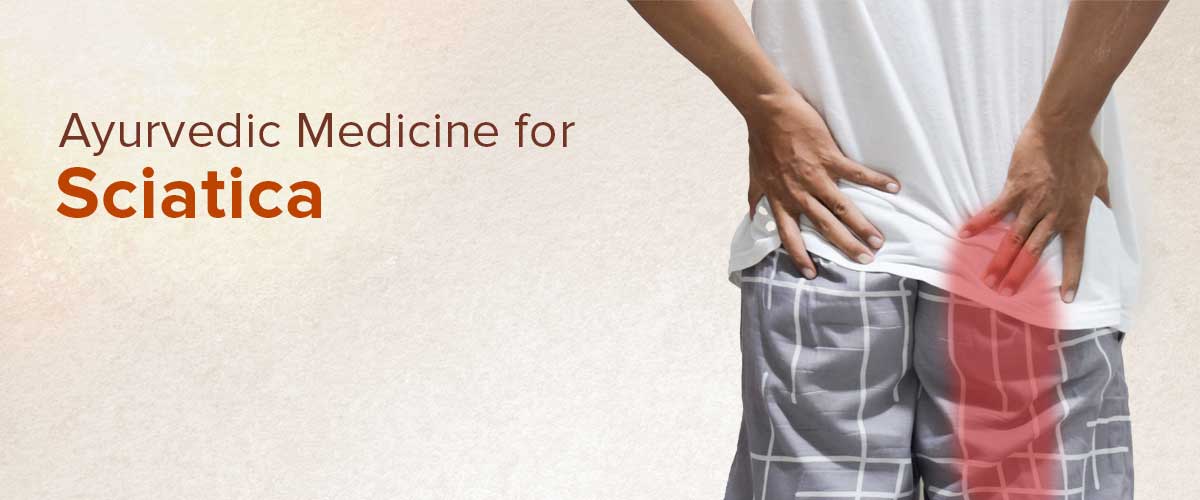
Sciatica is a description, not a diagnosis. The leg hurts because a nerve root in the back is being irritated, and what happens to it depends far more on which nerve, how much, and for how long than on any particular tablet.
What sciatica actually feels like
- Pain that starts in the buttock and runs down the back or outside of the thigh, below the knee, into the foot. Below the knee is the important part; pain that stops at the thigh is usually something else.
- Left or right, almost never both.
- Electric, shooting, or a deep tearing ache, worse on sitting, on bending, on coughing and on sneezing.
- Numbness or tingling in a strip of the leg or foot, and in more severe cases weakness: a foot that slaps, a leg that gives way, difficulty standing on the toes or the heels.
- The back may hurt less than the leg. That is typical of a disc, and it is why treating the back alone misses the problem.
Which nerve, and how it is found
- L5 tends to give pain down the outside of the leg into the top of the foot, with weakness of big-toe lift and difficulty heel-walking.
- S1 gives pain down the back of the leg into the sole and little toe, with a reduced ankle reflex and difficulty toe-walking.
- L4 reaches the front of the thigh and the inner knee.
- A careful examination does most of this. An MRI confirms it, and is worth doing when the picture is unclear, when weakness is progressing, or before any operation.
- Most cases are a disc. Some are a bony narrowing, a slipped segment, a tumour in an older person with weight loss, or a pelvic problem pressing the nerve from the other side.
- Piriformis and deep-gluteal syndrome mimic sciatica and are commonly blamed for it, which is how people end up treating a muscle for a disc.
What we prescribe
- Dashamoola kwath, the ten-root decoction, as the base for an acute episode. Warm, anti-inflammatory in the traditional sense, and tolerable for the weeks a flare actually lasts.
- Yogaraja guggulu for the stiff, cold, slow picture; kaishora guggulu where the pain is sharp, hot and worse at night. Choosing the wrong one is a common reason a course appears to fail.
- Ashwagandha where sleep has gone and the person is exhausted, which by week three is nearly always true.
- Guduchi as a general anti-inflammatory through the course.
- Triphala at night, because painkillers and immobility constipate, and straining with a disc is a bad combination.
- Mahanarayan or dhanwantharam taila applied externally over the lower back and the back of the thigh, with gentle warmth. Firm, deep massage of an acute disc is not helpful and often makes the leg angrier; rubbing the surrounding muscle is.
- Pain relief timed properly rather than chased. Waiting until the walk to the toilet is agony is the mistake almost everyone makes.
What the evidence supports
- Most acute sciatica improves substantially within six to twelve weeks without an operation. That is the single most useful fact about it, and it is why conservative treatment is the first move.
- Staying active beats bed rest. Bed rest beyond a day or two makes it worse, weakens the muscles, and delays recovery. This overturned the advice many people were given, and a surprising number are still following the old version.
- Conventional medicines for nerve pain, a short course of stronger anti-inflammatories, and in selected cases an epidural steroid injection, all have a place and evidence behind them.
- Surgical decompression is genuinely excellent for the right leg: persistent, disabling pain that matches the imaging, or a nerve that is losing power. People who have waited two years with a foot drop are not recovered by the operation.
- Herbal preparations have modest anti-inflammatory and analgesic support behind them. They are reasonable as part of a plan and unreasonable as the whole of it.
The exercises, because they do more than the tablets
- Directional preference work: repeated movements, usually extension for a disc, chosen by what centralises the pain out of the leg. If a movement sends pain further down the leg, it is the wrong movement.
- Nerve glides, done gently and never to the point of pain, since an irritated nerve is not helped by being yanked.
- Core and hip work once the acute phase settles, which is what prevents the next episode.
- Walking as far as tolerated, several times a day, rather than resting until it is comfortable.
- Sitting modified: not slumped, not prolonged, with a break every half hour. A car journey of ninety minutes can undo a week of improvement.
- Lifting taught properly, and no forward-bend-and-twist with weight in the hands.
When to be seen urgently
- Numbness around the back passage or genitals, difficulty passing urine, or loss of control of urine or bowels. That is cauda equina and it is a same-day surgical emergency, with hours rather than days mattering.
- Weakness in the foot that is progressing, a foot that drops, or a leg that gives way.
- Both legs involved, or a rapidly ascending numbness.
- Fever with severe back pain, recent infection, intravenous drug use, or immunosuppression. An infection in the spine presents like sciatica and is not sciatica.
- Back pain with unexplained weight loss, a history of cancer, night pain that does not change with position, or pain after significant trauma or a fall in an older person.
- Any bladder catheter, saddle numbness or severe progressive weakness in a person who has been told it is muscular.
What medicine will not do
- It will not push a disc back in. Discs resorb on their own over weeks to months, and the body does that work, not the tablet.
- It will not reverse numbness that has been present for a long time. A nerve that has been compressed for months recovers slowly and sometimes incompletely.
- It will not fix a fracture, an infection, a tumour or a slipped vertebra that needs stabilising.
- It will not substitute for the exercise work, which is the difference between a recovered back and a back that flares every winter.
How we judge it
- How far up the leg the pain has come. Pain retreating from the foot to the buttock is the improvement that matters, even if the back itself feels worse.
- Strength: toe-walk, heel-walk, and grip on a dynamometer if there is any doubt.
- Sleep, sitting tolerance, walking distance, and how much painkiller is being used.
- Reviewed at four weeks and again at eight. A leg that is not improving, or that is getting weaker, goes for imaging and a surgical opinion rather than another course.
- The tablet is a bridge over the worst two or three weeks. The recovery is built by movement, posture and strength, and that is the honest order of importance.
ShareWhatsApp
More medicines


Ask a physician before you start
Aksa physicians have been consulting on Ayurvedic care since 1992. In a free video consultation they will tell you which formulation fits your case, in what dose, and whether it suits the treatment you are already on.