
Ayurvedic medicine
Ayurvedic medicine for liver cirrhosis: support, not reversal
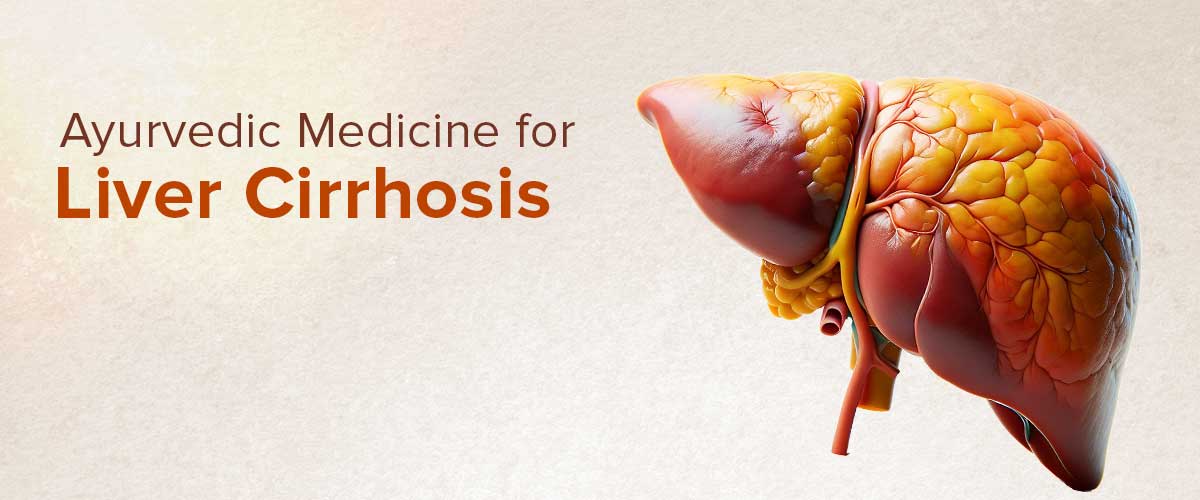
Cirrhosis is scarring, and scar tissue does not turn back into liver. What a course can do is support the liver that is left, ease some of the daily symptoms, and stay strictly inside the limits that a hepatologist has set.
What cirrhosis actually is
- Years of injury, from alcohol, from fatty liver and diabetes, from hepatitis B or C, or from a bile or autoimmune disease, and the liver responds by scarring.
- Compensated cirrhosis means the liver is scarred but still managing. People feel reasonably well and blood tests can look near-normal.
- Decompensated means it has stopped managing: fluid in the abdomen, jaundice, confusion, bleeding. Each of those is a turning point, and each needs emergency care.
- The goal of treatment at any stage is to remove whatever is still causing the injury and to prevent the complications, because that is what changes the course of the disease.
What we are willing to try
- Guduchi, where the picture allows it, as the general supportive preparation. It is the one we use most often in liver care and the one with the most human interest behind it.
- Kutki, picrorhiza, in small defined doses. Bitter, traditional, and with some animal and small-study support. Doses are kept low and courses kept short, because high-dose picrorhiza is not innocent.
- Bhumyamalaki and phyllanthus, used traditionally in jaundice and hepatitis, with the honest caveat that the human evidence is thin and inconsistent.
- Amla and turmeric in food-scale amounts, as antioxidant support rather than as treatment.
- Triphala only in the dose that keeps the bowel moving, and only where there is no confusion or drowsiness, since constipation is a trigger for hepatic encephalopathy.
- Nutrition, which is the most under-treated part of liver disease. Muscle loss in cirrhosis is a serious prognostic factor, and a small, frequent, protein-adequate plan with an overnight snack does more than any herbal course.
- Symptom support for itch, poor appetite, cramps and fatigue, which are the things that actually make the day difficult.
What we will not do
- We do not claim to reverse cirrhosis, dissolve scar tissue, normalise the liver, or spare anyone a transplant assessment.
- We do not touch decompensation. Fluid in the abdomen, jaundice that is deepening, black vomit or stools, drowsiness or personality change, fever with abdominal pain: those are emergency care, and a herbal tablet in that situation is not merely useless, it is dangerous.
- We do not stop or reduce a prescribed diuretic, lactulose, rifaximin, a beta-blocker, an antiviral or a steroid.
- We do not run a course without the hepatologist knowing. This is not a courtesy; it is because the drug list in cirrhosis is long and the margins are narrow.
The safety problem is larger here than anywhere else on this site
- A scarred liver metabolises drugs differently. A dose that is comfortable for a healthy person can accumulate, and the margin for error is small.
- Herbal products are a recognised cause of liver injury worldwide. Kava, comfrey, germander, chaparral, high-dose green-tea extract, unregulated weight-loss and bodybuilding packets, and some traditional preparations containing metals have all caused real harm.
- Anyone with cirrhosis is doubly exposed to that, and it is the reason we avoid proprietary blends entirely and use only named classical preparations with batch testing.
- Iron is not given unless deficiency is proven; iron loading damages an already-injured liver, and many tonics contain it.
- Licorice is limited, and can be wrong outright, because of fluid, potassium and blood pressure effects.
- Alcohol is not negotiable. No preparation that contains it, including the fermented arishta and asava class, which are otherwise everyday prescriptions here.
- Painkillers, sedatives and herbal sleeping aids each need checking with the physician. Sedation can precipitate encephalopathy.
What the conventional side has to keep doing
- Finding and treating the cause: antivirals for hepatitis B and C, complete alcohol abstinence, metabolic control in fatty-liver disease, and the specific drugs for autoimmune and bile-duct disease.
- Endoscopy for varices, and the beta-blocker or banding that prevents a bleed. A first variceal bleed is a life-changing event, and screening prevents some of them.
- Ultrasound and AFP every six months for liver cancer. Cirrhosis is the main risk factor, and early lesions are the treatable ones.
- Vaccination against hepatitis A and B, and flu, when the physician advises.
- Sodium restriction and diuretics for ascites, lactulose and rifaximin for encephalopathy, and transplant referral at the right time rather than at the last moment.
What you should tell us, and what you should tell your physician
- Every product being taken, including packets bought online, tonics, protein powders and gym supplements. Bring them.
- The most recent reports: bilirubin, INR, albumin, platelets, creatinine, sodium, the ultrasound and any endoscopy finding.
- Whether the cirrhosis is compensated, and what has decompensated it if it has not.
- The current drug list, because the interaction question here is not theoretical.
How we judge a course
- Not on a single liver enzyme, which moves for many reasons and means little in isolation.
- On how the person functions: appetite, weight and muscle, energy, itch, sleep, and whether the fluid is staying controlled.
- On stability. In cirrhosis, a year without a decompensation is a good result, and that is the honest measure of what support can offer.
- If the specialist pathway changes, the herbal course is reviewed at once rather than continued out of habit.
ShareWhatsApp
More medicines
Ask a physician before you start
Aksa physicians have been consulting on Ayurvedic care since 1992. In a free video consultation they will tell you which formulation fits your case, in what dose, and whether it suits the treatment you are already on.