
Ayurvedic medicine
Stomach ulcers: causes, symptoms and how the treatment works
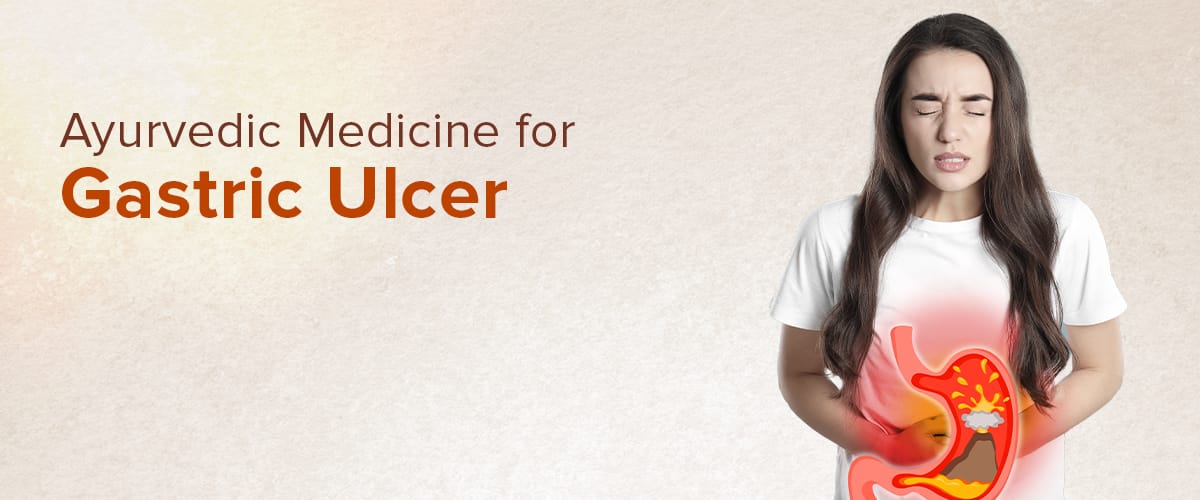
Stomach ulcer is one of the few common conditions where the cause can usually be named and removed. This is the walkthrough: what causes it, how it is found, what the treatment does, and where Ayurvedic medicine honestly fits.
What an ulcer is
- The stomach and the first part of the small intestine are lined with mucosa that survives acid. An ulcer is a break through that lining, deeper than an erosion, reaching into the muscle.
- Most are in the duodenum, the short tube just past the stomach. Gastric ulcers are less common and taken more seriously, because a proportion of them are cancer.
- The acid is not the disease. It is the thing that makes a hole in a lining that has lost its defences.
- The defence layer, the blood supply, prostaglandins and the bicarbonate in the mucus are what actually keep an ulcer from forming, and both of the common causes attack those defences.
The two causes that matter
- Helicobacter pylori. A spiral bacterium living in the mucus, usually acquired in childhood, present in a large share of the population, causing ulcer in a minority of those who carry it. It inflames the lining, weakens the defence, and is found in most duodenal ulcers and a majority of gastric ones.
- Anti-inflammatory painkillers. Ibuprofen, diclofenac, naproxen, indomethacin and high-dose aspirin block the prostaglandins that maintain the lining. Risk rises with dose, with age, with a previous ulcer, with steroids or blood thinners taken alongside, and with the infection also being present.
- Together they account for the overwhelming majority of ulcers, which is why a patient who has never been tested for either has not been treated properly.
The less common causes
- Smoking, heavy alcohol, and severe physiological stress in critical illness.
- A gastrin-secreting tumour, rare, presenting with multiple or unusually located ulcers and diarrhea.
- Crohn's disease of the stomach, and mast cell or blood disorders.
- A ulcerated cancer, which is why a gastric ulcer is biopsied and re-scoped.
- Functional dyspepsia, which causes exactly the same symptoms with no ulcer at all. It is common, it is miserable, and it is treated differently.
What it feels like
- A burning or gnawing pain high in the abdomen, between the breastbone and the navel.
- Often relieved by food or an antacid in duodenal ulcer, and often made worse by it in gastric ulcer. Both patterns are unreliable enough that neither diagnoses anything.
- Night waking with the pain is a characteristic feature and a good reason to get tested.
- Bloating, early fullness, belching, nausea, and a general sense of the stomach being unsettled.
- And in a significant number of people, nothing at all until the first complication. Silent ulcers bleed.
How it is diagnosed
- Endoscopy. It shows the ulcer, its site and size, allows a biopsy for the infection and for cancer, and finds the things that mimic ulcer pain.
- Urea breath test or stool antigen for H. pylori. Antibody blood tests are not much use, because a positive result cannot distinguish a past infection from a current one.
- A full blood count, because iron deficiency may be the only sign of a slow bleed.
- Testing is worth doing before treatment rather than after months of self-medication, and this is the single most common failure in ulcer care in India.
What the treatment does
- Eradication of the infection, with a proton-pump inhibitor and antibiotics for a defined course. This cures most ulcers and stops them returning, which no other part of the plan does.
- Stopping or substituting the painkiller, or protecting the stomach while it is unavoidable.
- Acid suppression for a defined healing period, then a test to confirm the infection has gone.
- A repeat endoscopy for a gastric ulcer, to confirm healing and to re-biopsy if it has not.
- Surgery now belongs to the complications: a perforation, a bleed that will not stop, or an outlet that has scarred shut.
Where Ayurvedic medicine fits
- As support for symptoms while the lining heals, and as a course for the people whose tests are clean and whose dyspepsia is still miserable.
- Licorice, ideally the deglycyrrhizinated form, soothes and has some mucosal-protective work behind it. Plain licorice taken for months raises blood pressure and lowers potassium.
- Amla, guduchi, and the classical antacid powders in short defined courses for the burning.
- Bitter preparations such as kutki and bhumyamalaki in small doses for the heaviness and bloating, where the picture suits them.
- Ashwagandha for sleep and the stress component, which is real but is not the cause.
- A defined, bland, non-spicy, non-acid diet for the first few weeks, small frequent meals, nothing late at night.
- What it does not do is eradicate the infection, and a course that leaves the bacterium in place leaves the ulcer coming back.
Diet and daily life
- Chilli, vinegar, very acidic food, strong coffee and tea, and fizzy drinks avoided while the lining is raw. None of them caused the ulcer; all of them hurt one.
- Alcohol reduced sharply during healing, and smoking stopped, since both slow healing and both raise recurrence.
- Small, frequent meals rather than two large ones, and a two-hour gap before lying down.
- Milk is not a treatment. It soothes for twenty minutes and then stimulates more acid.
- Regular meal timing, since an empty stomach with a high acid load is when the pain appears.
- Antibiotics taken for the eradication course properly, with the probiotics or yogurt the physician advises, and the full course finished even when the pain has gone.
Complications, and the warning signs
- Bleeding: black tarry stools, coffee-ground vomit, faintness, breathlessness, a low blood count. The commonest serious one.
- Perforation: sudden severe, board-like abdominal pain. An emergency within the hour.
- Penetration: pain going through to the back, usually a posterior duodenal ulcer eroding toward the pancreas.
- Obstruction: vomiting, food that will not pass, early fullness and weight loss from an outlet scarred shut.
- Cancer: an untreated or unbiopsied gastric ulcer, and long-standing H. pylori with atrophic change, which is a recognised pathway.
- Anyone with vomiting blood, black stools, faintness, severe sudden pain, difficulty swallowing, weight loss without trying, or symptoms that persist despite treatment needs endoscopy, not another preparation.
How to keep it from coming back
- Confirm the infection has gone, rather than assuming the course worked.
- Never take an anti-inflammatory painkiller without saying out loud that there is an ulcer history, and use the lowest effective dose for the shortest time when one is unavoidable.
- Household H. pylori is common. If relatives have chronic dyspepsia, that is worth raising rather than each person self-treating separately.
- Smoking and alcohol, which are the two habits most reliably linked to recurrence.
- And no long-term acid suppression without a physician having decided that it is needed, since years of these drugs have their own consequences that should be a deliberate choice rather than a drift.
ShareWhatsApp
More medicines




Ask a physician before you start
Aksa physicians have been consulting on Ayurvedic care since 1992. In a free video consultation they will tell you which formulation fits your case, in what dose, and whether it suits the treatment you are already on.