
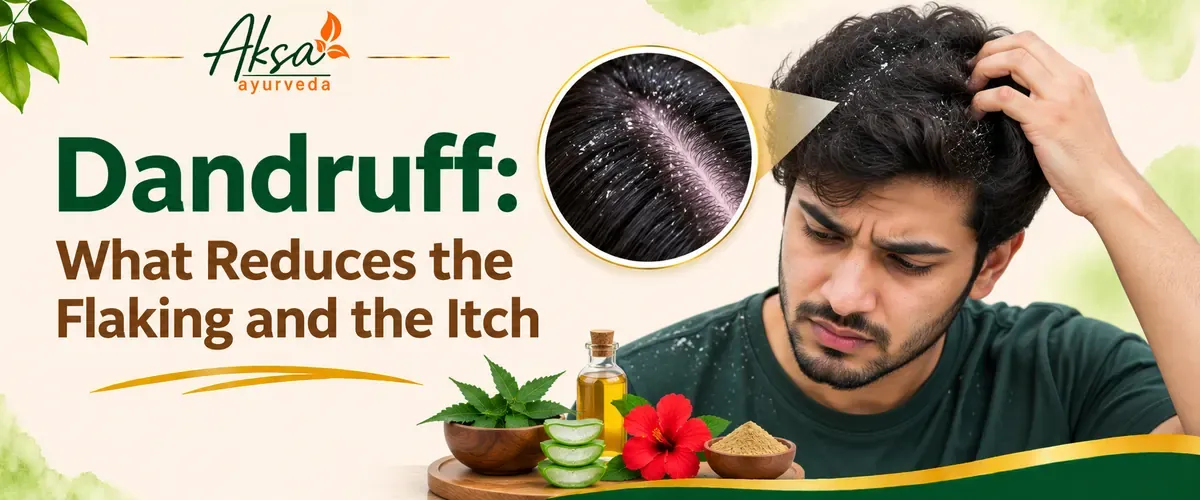
An itchy scalp is a skin problem, not a dry-hair problem, and the two most common things people do to fix it make it worse. What is usually behind the itch, how to wash it out, and when shampoo stops being the answer.
Before the remedies, which itch this is
Flaking with itch and oiliness, worse before a wash and in a humid month, with yellowish greasy flakes and redness behind the ears and at the temples, is seborrhoeic dermatitis, by far the commonest cause in this country. Small white dust-like flakes with no redness, in winter, on a scalp that also feels tight, is simple dryness. A thick silvery plaque with a sharp border that runs past the hairline onto the forehead, plus patches on the elbows or the navel, is psoriasis. Patches where the hair has broken off short, with swollen glands at the back of the neck, in a child, is fungal infection. Night-time itching concentrated behind the ears and at the nape, with other household members itching too, is head lice. And an itch that began two days after a black hair dye, with a burning scalp and a puffy face, is an allergy to the dye. Six different problems, five different treatments, and one shampoo aisle where all of them buy the same bottle.
The oiling mistake, which is the biggest one
The yeast that drives dandruff lives on the lipids in your skin surface. Overnight oiling, a cap tied on top of it, and a hot humid day is not a treatment for seborrhoeic dermatitis; it is the buffet. If the scalp is itchy, flaky and red, stop oiling it for four weeks and see what happens. If oiling is a habit you do not want to lose, keep it to a small amount for under two hours and then wash it out, and not more than once a week while the itch is active. On a genuinely dry, non-inflamed scalp in winter, oil is harmless, but it is a comfort measure rather than a cure, and it does nothing for the itch that comes from the flake-forming process itself.
The washing mistake
The other common error is washing too gently and too briefly. Medicated shampoo is a treatment with a contact time, not a soap. The routine that works:
- Pick one active: ketoconazole 2%, zinc pyrithione, selenium sulphide, coal tar, or salicylic acid. Combination is not better at the start.
- Wet the scalp, lather with the fingertips rather than the nails, and leave it on for three to five minutes before rinsing. Ten seconds and a rinse is why people conclude that nothing works.
- Twice a week. On the other days, if the hair needs washing, use a mild, non-alkaline, fragrance-light shampoo.
- Give it four continuous weeks before judging, then drop to once a week or once a fortnight for maintenance. Seborrhoeic dermatitis is a long-term tendency that goes quiet, not something that leaves for good.
- Rinse with comfortably warm, not hot, water. Do not tie hair up wet or sleep in a damp turban; the yeast likes exactly that.
What else genuinely helps the itch
- A cool compress or a fan on the scalp for ten minutes settles an acute flare; cold dulls itch fast and safely.
- Apple cider vinegar in water, one part to four, as a final rinse a couple of times a week reduces the sting for some people and changes the surface pH. Never undiluted, and never on cracked skin.
- Tea tree oil has modest anti-fungal data but is a well-known contact allergen; two or three drops into a shampoo bottle is the ceiling, not a scalp application.
- An oral non-drowsy antihistamine in the day and a sedating one at night is legitimately useful when the itch is destroying sleep, mostly by stopping the scratching.
- Aloe vera gel on the inflamed edge of the hairline is soothing and harmless. Coconut water, onion juice and garlic rubs are not treatments; onion and garlic on broken scalp skin cause chemical burns.
- Change the pillowcase twice a week, wash caps and helmet liners, and do not share combs or towels.
The things that keep an itchy scalp itchy
Scratching, which creates the sores that then crust and itch more. Daily strong shampoo that strips the surface and provokes more oil. Heavy gel, wax and spray on the hairline. A helmet worn over damp hair all day. Weekly chemical treatments, bleach, smoothening and rebonding. Long gaps between washes in a hot month. Untreated dandruff in a person who also has HIV, diabetes, Parkinson's disease or eczema, where it runs worse. And stress and poor sleep, which genuinely flare it; that is not a moral claim, it is how the skin's inflammation cycle behaves.
Internal things worth checking once
Generalised itch with a scalp complaint, or an itch all over the body with fatigue, warrants a blood count, haemoglobin and ferritin, blood sugar, thyroid and liver and kidney function at least once. Iron deficiency and thyroid disease both worsen scalp and hair symptoms. In a person with widespread itchy skin and no rash, and weight loss or night sweats, the itch is a signal and not a scalp problem.
When to stop self-treating
Hair coming out in patches, or broken stubble rather than long shed hair, which suggests fungal infection and needs oral medicine for weeks, not shampoo. Pus, honey-coloured crusting, or a soft boggy painful swelling, which is a severe fungal reaction that can scar the follicles permanently. Swollen glands in the neck with fever. A thick silvery plaque extending past the hairline. Nits cemented to the hair shaft close to the scalp. Itching so severe the scalp is raw and weeping. Numbness, or a patch that cannot feel a touch. Face or eye swelling after a dye, which is an allergic reaction needing same-day assessment. And any scalp symptom in a young child, or in someone whose immunity is suppressed, where the threshold for being seen should be low.
How we look at it at Aksa
The scalp examined in good light with the hair parted, not described to us across a table, plus the ears, the hairline, the nape and the rest of the body, because the diagnosis usually lives in one of those places. Skin scraping for fungus before anything is called dandruff, since a steroid cream on a fungal infection makes it spread and hides it at the same time. Bloods when the picture is more than a scalp. Then the actual plan, which for most people is a correctly used medicated shampoo, an oiling change, and four weeks of patience; and where it is psoriasis, fungal infection or an allergy, treatment that is a different conversation entirely. An itchy scalp is very rarely serious and very often mistreated, and the person who does best is the one who stops adding remedies and starts using one properly.
More home remedies


Ask whether this remedy fits you at all
In a free video consultation an Aksa physician reads the complaint against your digestion, sleep and history, and tells you plainly what a home remedy can and cannot do for it.